
Sauces & Condiments
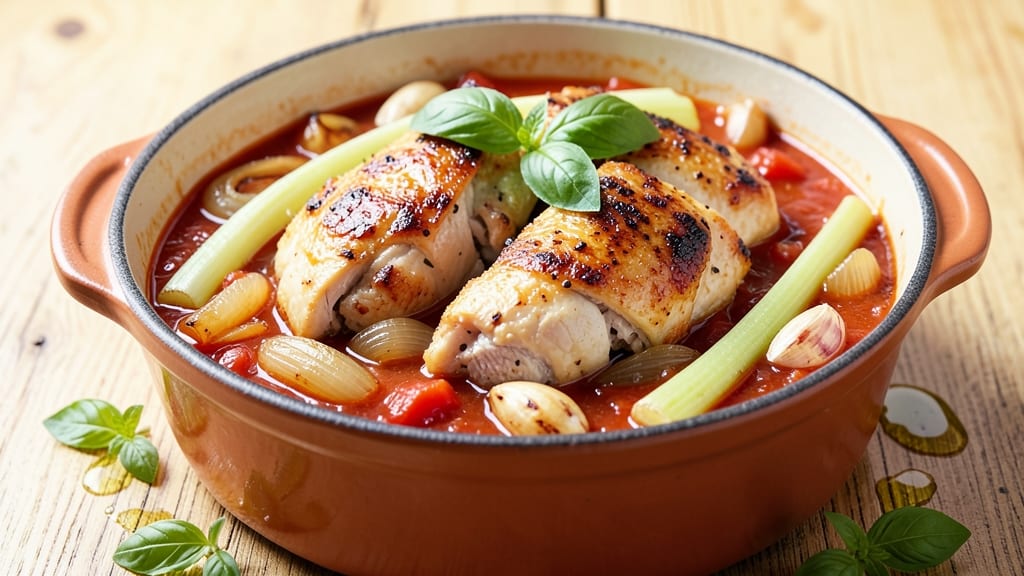
Grandma's chicken cacciatore recipe with tomato sauce brings the soul-warming flavors of a home kitchen to your table, where tender chicken simmers in a rich, aromatic sauce of wine, tomatoes, and fresh herbs.
I first learned this dish from my grandmother's handwritten recipe card—her notes were vague, but the results were always perfect. The secret lies in slow cooking, which transforms tough chicken into melt-in-your-mouth bites while building layers of deep, savory flavor.
This recipe delivers restaurant-quality results without requiring advanced techniques. You'll start by browning chicken thighs and breasts with onions, garlic, and celery—a step that unlocks incredible depth of flavor.
Deglazing the pan with white wine removes any browned bits, creating the foundation for a velvety tomato sauce infused with oregano, basil, and thyme. The dish simmers gently for about 45 minutes, allowing the chicken to become fork-tender and the sauce to thicken into a luscious consistency.
By the time you serve this dish, your kitchen will be filled with an irresistible aroma of herbs and tomatoes, and every bite will deliver tender chicken swimming in a rich, slightly sweet sauce. The sauce clings perfectly to the chicken, making it impossible to resist.
Serve it over pasta, with crusty bread for soaking up every last drop, or alongside a simple side salad for a complete meal that feels like a warm embrace.
What makes this recipe truly special is its versatility—it's perfect for weeknight dinners, family gatherings, or even a cozy Sunday supper. The flavors develop even better the next day, making it an ideal make-ahead dish. Let's create this timeless classic that brings a taste of home to your dinner table.
Ingredients for grandma's chicken cacciatore recipe with tomato sauce
The heart of Grandma's chicken cacciatore lies in these simple, soulful ingredients—each one playing its part in that perfect tomato-wine symphony.
| Ingredient | Amount | Notes |
|---|---|---|
| Chicken Thighs and Breasts 🍗 | 2 lb | Bone-in, skin-on preferred |
| Yellow Onion 🧅 | 1 whole | Medium size, diced |
| Celery Stalks 🥬 | 3 whole | Trimmed, chopped |
| Garlic Cloves 🧄 | 4 cloves | Fresh, minced |
| Extra-Virgin Olive Oil 🫒 | ¼ cup | For browning chicken |
| Dry White Wine 🍷 | 1 cup | Sauvignon Blanc or Pinot Grigio |
| Canned San Marzano Tomatoes 🍅 | 2 cans | 28 oz each, crushed by hand |
| Chicken Broth 💧 | 1 cup | Low-sodium preferred |
| Fresh Basil Leaves 🌿 | ½ cup | Chopped, stems removed |
| Fresh Oregano Leaves 🍃 | ¼ cup | Chopped, or 1 tbsp dried |
| Fresh Thyme Sprigs 🌿 | 2 whole | Leaves only, chopped |
| Salt 🧂 | 1 ½ tsp | Kosher or sea salt |
| Ground Black Pepper 🌶️ | ½ tsp | Freshly cracked |
| Red Wine Vinegar 🍋 | 1 tbsp | For brightness |
| Fresh Parsley Leaves 🌿 | ¼ cup | Chopped, for garnish |
The chicken is everything here. Bone-in, skin-on thighs and breasts stay juicier during the long simmer, but boneless works in a pinch. Grab the family-style packs at Costco if you're feeding a crowd—they're cheaper and cut evenly. For the aromatics, yellow onions and celery (the holy trinity of Italian cooking) should be finely chopped—Trader Joe's pre-diced veggie mix saves time if you're in a hurry. The garlic? Fresh is non-negotiable—jarred tastes like sad dust in this dish. If you're feeling fancy, roast the garlic cloves whole in the olive oil before adding them to the pan for a sweeter, deeper flavor.
No white wine? Substitute chicken broth with a splash of apple cider vinegar—it mimics the acidity perfectly. The San Marzano tomatoes are worth hunting down at Whole Foods or Italian markets, but any quality canned tomatoes work. Dried oregano at half the amount gets you close if fresh isn't available, but nothing beats the bright, peppery notes of fresh. For the herbs, basil and thyme are the stars—if you've got them, use them. No fresh thyme? Dried thyme at one-third the amount works, but it won't have that same earthy punch. The red wine vinegar adds a bright finish—substitute lemon juice if that's all you've got.
This sauce gets better with time—make a double batch and freeze half. The chicken reheats beautifully, so portion it into containers for easy lunches. Store the sauce in the fridge for up to 5 days (it'll thicken more overnight—just add a splash of broth when reheating). For longer storage, freeze the sauce in ice cube trays—perfect for adding to pasta or eggs later. The herbs? Wash and wrap them in damp paper towels in a bag, and they'll stay fresh for 5-7 days. Trust me, the extra effort makes all the difference.
Why You'll Love This Recipe
- One-Pot Magic: I love that this dish lives in one Dutch oven—no switching pots, no mess. Just sear the chicken in olive oil, toss in the onions and celery, and let the wine and tomatoes do the rest. My kitchen stays clean while the flavors build, and honestly? That’s a win.
- Wine-Infused Comfort: The dry white wine reduction is what makes this dish sing. It’s not sweet or heavy, but bright and complex—like a glass of Sauvignon Blanc in every bite. Pair that with the garlic, thyme, and crushed San Marzano tomatoes, and you’ve got a sauce that’s rich but never cloying. My picky teen actually asked for seconds.
- Feeds a Crowd (or Leftovers): This recipe serves four heartily, but it’s the kind of dish that tastes even better the next day. The sauce thickens overnight, and reheating it? Just add a splash of broth and you’re golden. I’ve used it for Sunday dinner, weeknight meals, and even game-day appetizers—always a crowd-pleaser.
- Budget-Friendly Luxury: Bone-in, skin-on chicken thighs are cheaper than breasts, and the canned San Marzano tomatoes add depth without breaking the bank. Fresh herbs like basil and parsley cost next to nothing when bought in small bunches, and the wine? A good bottle lasts forever. It’s the kind of meal that feels indulgent but won’t drain your wallet.
Step-by-step instructions for Grandma's chicken cacciatore
Here's how to create that legendary Italian flavor—slow-simmered, wine-infused, and packed with herbaceous richness.
Sear the Chicken Until Deeply Browned
Pat the 2 lb chicken thighs and breasts dry with paper towels—this is non-negotiable for crispy skin. Heat the ¼ cup extra-virgin olive oil in a large Dutch oven over medium-high heat until shimmering. Working in batches if needed, add the chicken pieces and sear for 5-6 minutes per side until golden brown with crispy edges. The reason for this step is simple: those browned bits pack maximum flavor into the sauce.
As you sear, sprinkle the chicken generously with 1½ tsp salt and all ½ tsp ground black pepper. Once browned, remove the chicken to a plate and set aside. Here's the thing—don't clean the Dutch oven yet. Those beautiful browned bits are your flavor foundation for the sauce. Keep the heat at medium for the next step.
Build the Flavor Base with Onions, Celery, and Garlic
Add the diced 1 yellow onion and chopped 3 celery stalks to the Dutch oven. Cook for 5-6 minutes, stirring occasionally, until the vegetables soften and begin to release their natural juices. This is where the sweetness of the onion and celery starts to caramelize—that's the aromatic base of your sauce.
Add the minced 4 garlic cloves and cook for just 30 seconds until fragrant. Here's where it gets fun—add the 1 tbsp red wine vinegar and let it bubble away for about 1 minute. This brightens the flavors and cuts through any bitterness from the garlic. Immediately pour in the 1 cup dry white wine and scrape up all those browned bits from the bottom with a wooden spoon. Let the wine simmer until reduced by half, about 3-4 minutes.
Simmer the Tomato-Herb Sauce
Crush the contents of the 2 cans canned San Marzano tomatoes by hand right in the Dutch oven. Add the 1 cup chicken broth, chopped ½ cup fresh basil leaves, chopped ¼ cup fresh oregano leaves, and leaves from the 2 fresh thyme sprigs. Stir well to combine, then return the chicken to the pot. The remaining ½ tsp salt can be added now if you prefer.
Bring the mixture to a gentle simmer, then reduce heat to low. Here's the moment that matters: cover the pot and let it simmer for 45-50 minutes. You want the chicken to cook through and the sauce to thicken slightly. The chicken is done when it reaches an internal temperature of 165°F and the juices run clear. If the sauce gets too thick, add a splash of water or broth to loosen it.
Finish and Garnish for Maximum Flavor
Once the chicken is cooked through, remove it from the sauce and transfer to a serving platter. Tent loosely with foil to keep warm. Increase the heat to medium and let the sauce simmer uncovered for an additional 10-15 minutes to thicken slightly and develop deeper flavors. This final reduction concentrates the taste and creates that perfect sauce consistency.
Return the chicken to the sauce, spooning some of the sauce over the top. Garnish with the chopped ¼ cup fresh parsley leaves just before serving. The parsley adds a fresh finish that brightens all the rich, herby flavors. Serve immediately with crusty bread or over pasta to soak up every last bit of that incredible tomato-herb sauce.
Pro Tips For Making Grandma'S Chicken Cacciatore Recipe With Tomato Sauce
- Salt the Chicken Early: Sprinkle that 1 tsp salt and ½ tsp pepper right as you sear—not after. The skin needs time to absorb it while it crisps, or you’ll end up with bland, soggy edges. I used to wait until the end, and the first bite was always a letdown.
- Crush Tomatoes by Hand: Skip the blender—mashing those San Marzano tomatoes with your fingers releases more juice and breaks down the flesh into a silkier sauce. It’s messy, but it makes a real difference in texture. (Yes, even if you’re impatient like me.)
- Don’t Rush the Wine Reduction: Let that 1 cup white wine bubble away until it’s actually reduced by half—about 3-4 minutes. Skimping here means a thinner sauce and weaker flavor. I learned this the hard way after tasting a watery version that tasted more like broth.
- Simmer Covered, But Not Too Tight: Use a lid loosely during the 45-50 minute simmer—just enough to trap steam, but not so tight it turns into a sauna. Too much condensation drowns the herbs and dilutes the sauce. Trust me, your basil and oregano will thank you.
Best sauces and condiments for grandma's chicken cacciatore recipe with tomato sauce
Wine-Infused Sauce Boost
Grandma’s secret? A splash of dry white wine like Pinot Grigio or Sauvignon Blanc transforms the sauce from ordinary to extraordinary. The acidity cuts through the richness, while the alcohol cooks off to leave behind a bright, complex flavor.
I always have a bottle of Trader Joe’s Italian white wine on hand—it’s affordable and works perfectly. If you’re avoiding alcohol, substitute 1 cup low-sodium chicken broth mixed with 1 tbsp apple cider vinegar for that same tangy punch.
Tomato Sauce Upgrades
The star of the show is those San Marzano tomatoes, but you can elevate the sauce even further. Add 1 tbsp tomato paste to the crushed tomatoes for deeper color and body.
I also love a pinch of sugar (about ½ tsp) to balance acidity—trust me, it makes all the difference. For extra richness, stir in 2 tbsp heavy cream or ¼ cup ricotta at the end of cooking. The creaminess mellows the herbs beautifully.
Herbaceous Freshness
Fresh herbs are non-negotiable for this dish, but I know life happens. If you’re short on time, use 1 tbsp dried oregano (instead of ¼ cup fresh) and ½ tsp dried thyme.
For a zesty twist, add 1 tsp lemon zest when you return the chicken to the sauce. I also keep a small bunch of fresh parsley in the fridge for garnishing—it’s the perfect bright finish to all that rich tomato flavor. 🌿
Umami Enhancers
For a deeper, meatier flavor, I add 1 tbsp olive oil-packed sun-dried tomatoes (chopped) or 1 tsp fish sauce (a secret from my Italian neighbors). Both add umami without overpowering.
Another trick? A splash of balsamic vinegar (about 1 tbsp) at the end creates a caramelized glaze on the chicken. It’s like a little sweet-tart surprise in every bite.
Texture Play
Love creamy sauces? Blend ½ cup of the cooked sauce with ¼ cup ricotta or mascarpone until smooth, then stir it back in. For a chunky texture, add ½ cup roasted red peppers (jarred or fresh) or ¼ cup toasted pine nuts at the end.
I also like topping the dish with crispy prosciutto bits for a salty crunch—just fry 4 oz prosciutto in olive oil until golden and flaky.
Nutrition facts
Frequently asked questions
Why does this recipe call for bone-in chicken thighs and breasts?
Bone-in chicken stays juicier during the long simmer because the bone acts as a natural moisture reservoir. The skin-on pieces also crisp up beautifully during searing, adding texture contrast. If you can't find bone-in, boneless works but may dry out faster—just reduce simmer time to 35 minutes and check for 165°F internal temp sooner.
What if I don't have fresh herbs like basil or thyme?
No problem! Use 1 tbsp dried oregano instead of ¼ cup fresh and ½ tsp dried thyme for thyme. For basil, skip it or use 1 tsp dried basil. The dish still tastes amazing—just let it simmer a little longer to develop flavor. The wine and tomatoes will carry the main taste profile.
How do I prevent the sauce from getting too thick?
Keep 1 cup chicken broth handy and add it gradually if the sauce thickens too much. The key is to maintain a gentle simmer—if it boils vigorously, the liquid evaporates faster. For extra richness, stir in 2 tbsp heavy cream at the very end before serving. Always taste as you go!
Can I make this dish ahead of time?
The flavors improve overnight. Cook the chicken and sauce as directed, then refrigerate. Reheat gently on the stove with a splash of broth to restore moisture. The sauce will thicken more when cold—just add a little liquid when reheating. Leftovers keep well for 5 days in the fridge.