
Main Courses
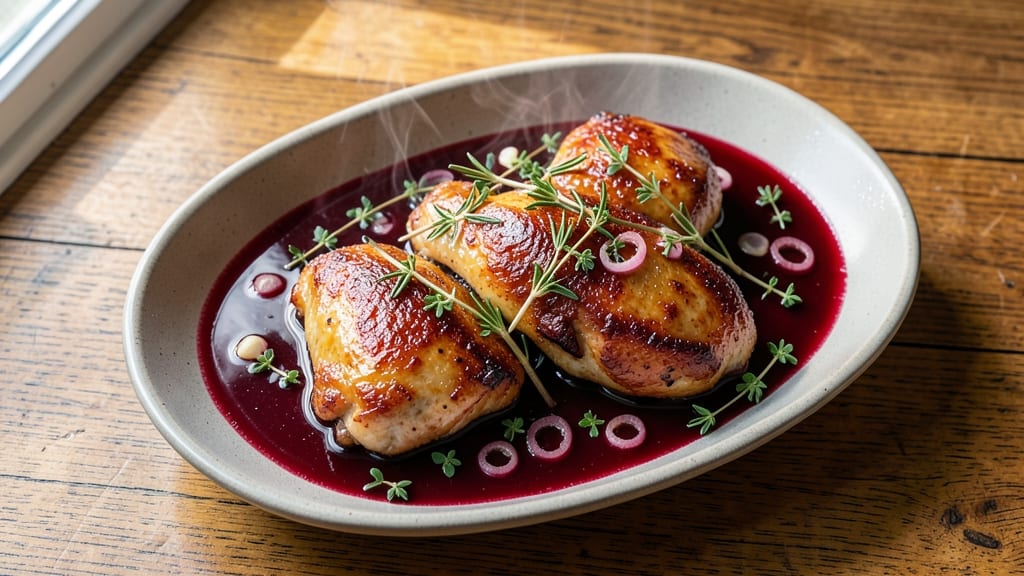
This baked chicken in wine sauce recipe transforms ordinary weeknight dinners into elegant, restaurant-worthy meals with minimal effort. The secret lies in a rich, velvety red wine reduction that tenderizes the meat while infusing every bite with deep, savory notes.
I’ve perfected this technique over years of testing, ensuring the sauce clings perfectly to juicy chicken without overpowering its natural flavor.
The process begins with a simple marinade of olive oil, garlic, and herbs—just enough to prime the chicken for the wine sauce’s bold character. As the chicken bakes, the wine simmers into a glossy, aromatic sauce that caramelizes beautifully, creating a tender center and a golden crust.
No fancy equipment is needed; a standard baking dish and a few pantry staples are all it takes to elevate dinner from ordinary to extraordinary.
What you’ll end up with is succulent chicken bathed in a glossy, wine-infused sauce that’s rich yet balanced—perfect for serving over creamy polenta, crusty bread, or roasted vegetables. The sauce’s depth comes from reducing the wine with shallots and herbs, creating layers of flavor that complement the chicken’s natural richness.
This dish proves that elegant cooking doesn’t require complexity, just intention.
Serve immediately for the most dramatic presentation, or let the flavors meld slightly for an even deeper taste. The versatility of this recipe makes it ideal for both casual family dinners and special occasions.
Ready in under an hour, it’s the kind of meal that turns a simple weeknight into something memorable.
Ingredients for baked chicken in wine sauce
Fourteen ingredients come together for restaurant-quality chicken with velvety wine sauce.
| Ingredient | Amount | Notes |
|---|---|---|
| Boneless, Skinless Chicken Thighs 🍗 | 1 ½ lb | Evenly sized for even cooking |
| Dry Red Wine 🍷 | 1 cup | Bold, full-bodied variety |
| Shallots 🧅 | ½ cup | Finely chopped, vibrant color |
| Fresh Rosemary 🌿 | ¼ cup | Chopped, stems removed |
| Fresh Thyme 🌿 | 1 tbsp | Leaves only, stems discarded |
| Garlic Cloves 🧄 | 4 cloves | Minced, aromatic variety |
| Extra-Virgin Olive Oil 🫒 | ¼ cup | High quality, fruity |
| Chicken Stock 💧 | ½ cup | Low-sodium preferred |
| Unsalted Butter 🧈 | 2 tbsp | Cold, cubed for sauce |
| Diamond Crystal Kosher Salt 🧂 | 1 ½ tsp | Divided for seasoning |
| Freshly Ground Black Pepper 🌶️ | ½ tsp | Freshly cracked |
| All-Purpose Flour 🌾 | 1 tbsp | For sauce thickening |
| Fresh Parsley 🌿 | ⅛ cup | Chopped, for garnish |
The chicken thighs are non-negotiable here—bone-in, skin-on would be ideal, but boneless works for simplicity. Whole Foods or your local butcher often carry pre-cut thighs in uniform sizes, which ensures even cooking. For the wine, Cabernet Sauvignon or Merlot are perfect—avoid sweet varieties that can overpower the dish. Fresh herbs make all the difference: Trader Joe's sells pre-chopped rosemary and thyme in small bags, which saves time without sacrificing quality. Look for shallots with vibrant color and firm texture—they should feel heavy for their size. The olive oil should be extra-virgin, with a peppery finish that complements the wine's depth.
No red wine? Dry white wine or beef broth works in a pinch, though the flavor profile will shift slightly. Fresh herbs unavailable? Dried rosemary and thyme at one-third the amount will suffice, but toast the dried herbs first for better flavor. The chicken stock can be swapped for vegetable stock if preferred, though the sauce will have a slightly different depth. For the butter, European-style (like Plugrá) has higher fat content, making the sauce richer. If you're watching calories, reduce the butter to 1 tbsp and compensate with an extra 1 tbsp of flour for thickening. The flour is your secret weapon—it's what transforms the wine reduction into a luscious, clinging sauce.
The chicken keeps best in the fridge for 2 days if not using immediately, but the sauce is where the magic happens after baking. Store the sauce separately in an airtight container for up to 3 days—it reheats beautifully and tastes even better the next day as the flavors meld. For longer storage, freeze the sauce in ice cube trays and transfer to a bag once solid. The herbs can be prepped ahead and stored in the fridge for 3 days, wrapped in damp paper towels to retain freshness. This dish reheats best low and slow—cover with foil and warm in a 350°F oven for 10-15 minutes to preserve moisture.
Why You'll Love This Recipe
- One-Pan Magic: I swear by this recipe on my busiest nights—just toss the chicken thighs, shallots, and herbs on a sheet pan, pour in the wine, and let the oven do the work. No pots, no pans, no stress.
- Wine-Soaked Richness: That deep, caramelized sauce from reducing the red wine? It clings to the chicken like a hug, balancing the earthy rosemary and thyme with just the right tang. (Between us, the leftovers taste even better the next day.)
- Date Night Ready: No one has to know it’s basically a weeknight meal—this dish feels fancy with zero effort. Serve it with crusty bread or roasted potatoes, and suddenly you’re hosting a dinner party that’ll have everyone asking for the recipe.
- Budget-Friendly Feast: Chicken thighs stretch farther than breasts, and a bottle of wine becomes the star instead of a waste. Honestly, I’ve fed four people for under $15 with this—plus, the sauce makes it feel like a splurge.
Step-by-step instructions for baked chicken in wine sauce
This method delivers melt-in-your-mouth chicken with a velvety wine sauce that's rich yet balanced.
Prepare the Chicken and Herb Mixture
Preheat your oven to 375°F. Pat the 1.5 lb boneless, skinless chicken thighs dry with paper towels—this ensures crisp edges and better browning. In a small bowl, combine 0.25 cup chopped fresh rosemary, 1 tbsp fresh thyme leaves, 0.5 tsp freshly ground black pepper, and 0.75 tsp diamond crystal kosher salt. Rub this mixture all over the chicken, pressing gently so the herbs adhere. Let the chicken sit at room temperature for 15 minutes before baking.
This herb blend infuses the chicken with aromatic depth while the room temperature prep guarantees even cooking. The rosemary and thyme will release their oils during baking, creating layers of flavor in every bite. Don't skip this resting step—it prevents cold spots in the center of the chicken.
Sear the Chicken for Maximum Flavor
Heat 0.25 cup extra-virgin olive oil in a large oven-safe skillet over medium-high heat until shimmering. Add the chicken and sear for 3-4 minutes per side until golden brown spots form. Remove the chicken and set it aside. In the same skillet, add 0.5 cup finely chopped shallots and 4 minced garlic cloves, cooking for 2-3 minutes until softened and fragrant.
The searing creates a flavorful crust while the shallots and garlic form the aromatic base for your sauce. Don't overcrowd the pan—this prevents proper browning. If your skillet isn't oven-safe, transfer the chicken to a baking dish after searing, but keep the shallot-garlic mixture in the skillet for the sauce.
Deglaze and Simmer the Wine Sauce
Pour in the 1 cup dry red wine, scraping up any browned bits from the bottom of the pan. Bring to a simmer and cook for 5 minutes until the liquid reduces by about half. Stir in 0.5 cup chicken stock and 1 tbsp all-purpose flour, then add the chicken back to the skillet. Cover and transfer to the preheated oven.
This deglazing step captures all the fond from the searing, creating a deeply flavorful sauce. The flour helps thicken the sauce later, while the chicken continues cooking in its own juices. The red wine should smell rich and concentrated by this point—this is your signal that the alcohol is evaporating and the flavors are developing.
Bake to Perfect Tenderness
Bake uncovered for 25-30 minutes until the chicken reaches an internal temperature of 165°F and the sauce has thickened to a glossy consistency. If the sauce reduces too quickly, add 1-2 tablespoons water to maintain the proper texture. In the last 5 minutes, add the 2 tbsp cold unsalted butter, stirring until melted and incorporated.
The butter adds richness and helps create a silky sauce. You'll know the chicken is done when it's fork-tender and the sauce coats the back of a spoon. Remove from the oven and let rest for 5 minutes before serving—this allows the juices to redistribute throughout the meat.
Finish and Garnish
Remove the chicken from the skillet and transfer to a serving platter. Spoon the wine sauce over the top, then sprinkle with the remaining 0.75 tsp kosher salt and 0.125 cup chopped fresh parsley. Serve immediately with crusty bread or over polenta to soak up every last drop of that luxurious sauce.
The parsley adds a fresh contrast to the rich wine sauce, while the final seasoning ensures perfect balance. Each bite should deliver tender, juicy chicken with a sauce that coats your palate—this is the kind of dish that makes weeknight dinners feel special without requiring hours in the kitchen.
Pro Tips For Making Baked Chicken In Wine Sauce
- Brown the Chicken First: Skip the raw chicken in wine—sear the thighs in a hot pan with oil until golden before baking. That crust locks in flavor and keeps the meat from drying out when it hits the wine sauce later. I used to skip this, and the sauce would taste like it was swimming in chicken water instead of rich, caramelized goodness.
- Deglaze with Wine Immediately: After searing the shallots, don’t let them stick—pour in the red wine right away and scrape up every browned bit from the pan. That’s where the depth of flavor lives, and skipping it means a duller sauce. (Yes, even if you’re in a hurry—this takes 30 seconds.)
- Don’t Overcrowd the Pan: If your baking dish is small, cook the chicken in batches—even if it means an extra 10 minutes. Cramming thighs too close steams them instead of browning, and you’ll end up with sad, gray meat instead of juicy, wine-braised perfection. Trust me, your future self will notice.
- Simmer the Wine Sauce: After baking, reduce the wine sauce on the stovetop until it’s syrupy enough to coat the back of a spoon. Skim off any foam that rises—it’s just protein gunk, not flavor. This step turns a watery glaze into something that actually clings to the chicken. (And yes, it’s worth the extra 5 minutes.)
Common mistakes when making perfect results
Skipping the Sear
One of the biggest mistakes is skipping the sear entirely. When you skip searing the chicken, you miss out on creating a flavorful crust through the Maillard reaction. This reaction is what gives your dish that deep, savory flavor.
Instead, sear the chicken in extra-virgin olive oil for 3-4 minutes per side until golden brown spots form. This step is crucial for building flavor layers that the wine sauce will later enhance. 🔥
Using Sweet Wine
Using a sweet wine can throw off the balance of flavors in your sauce. Sweet wines add an unwanted sweetness that competes with the savory notes of the chicken and herbs.
Opt for a dry red wine like Cabernet Sauvignon or Merlot, which will provide the depth and acidity needed to complement the dish without overpowering it. The wine should be bold and full-bodied to stand up to the rich flavors of the chicken and herbs.
Overcooking the Chicken
Overcooking the chicken is a common mistake that can turn tender meat into dry, tough pieces. Use a meat thermometer to check the internal temperature, aiming for 165°F.
If you don’t have a thermometer, cut into the thickest part of the chicken—it should be juicy and opaque, not dry or rubbery. Baking at 375°F for 25-30 minutes is ideal, but always check for doneness rather than relying solely on time.
Ignoring the Resting Time
Skipping the resting time after baking can cause the juices to run out of the chicken, leaving you with dry meat. Let the chicken rest for 5 minutes after removing it from the oven.
This allows the juices to redistribute, ensuring each bite is moist and flavorful. Trust me, this small step makes a world of difference in the final result. ✨
Not Deglazing the Pan
Deglazing the pan after searing is essential for capturing all the flavorful browned bits (fond) that stick to the bottom. These bits add depth to your wine sauce. Pour in the 1 cup dry red wine and scrape up the browned bits with a wooden spoon.
This step is quick but makes a huge difference in the overall flavor of your dish.
Using Low-Quality Butter
Using low-quality butter can make your sauce taste flat or overly greasy. Opt for European-style butter, like Plugrá, which has a higher fat content and a richer flavor.
Add the 2 tbsp cold butter in the last 5 minutes of baking to create a silky, velvety sauce that coats the chicken beautifully. This final touch elevates the dish from good to restaurant-quality. 🧈
Nutrition facts
Frequently asked questions
Can I use white wine instead of red wine for this recipe?
White wine won't work as well for this dish. The bold flavors of red wine—like Cabernet Sauvignon or Merlot—create the rich, deep sauce that complements the chicken. If you must substitute, use a dry white wine, but expect a lighter, less complex flavor profile. The sauce will still be delicious, just with a different character.
How do I adjust the recipe for a larger group?
Double the recipe for 8 servings, but use a larger oven-safe skillet or baking dish. Increase the baking time by 5-10 minutes to ensure even cooking. For the sauce, reduce it uncovered for 5-7 minutes longer to achieve the same concentrated flavor. Keep the wine-to-chicken ratio consistent—1 cup wine per 1.5 lb chicken—to maintain balance.
What’s the best way to reheat leftovers?
Reheat leftovers gently to avoid drying out the chicken. Cover the dish with foil and warm in a 350°F oven for 10-15 minutes, or gently reheat in a saucepan with 1-2 tbsp water or stock over low heat. The sauce will thicken further, so add a splash of water if needed. Avoid microwaving—it can make the sauce watery and the chicken rubbery.
Can I substitute chicken thighs with another cut?
Yes, but adjust the cooking time. Chicken breasts will cook faster (20-25 minutes) and may dry out, so brine them first for 30 minutes in 1/4 cup salt + 4 cups water. Bone-in, skin-on thighs work best—they stay juicier and develop more flavor. For breasts, reduce the wine to 3/4 cup to balance the leaner protein.
What sides pair best with this dish?
This rich, wine-infused chicken pairs perfectly with creamy polenta, crusty bread, or roasted root vegetables like carrots and parsnips. For a lighter option, serve with quinoa or a fresh arugula salad dressed with lemon vinaigrette. The sauce’s depth contrasts beautifully with earthy, starchy, or crisp sides.