
Main Courses
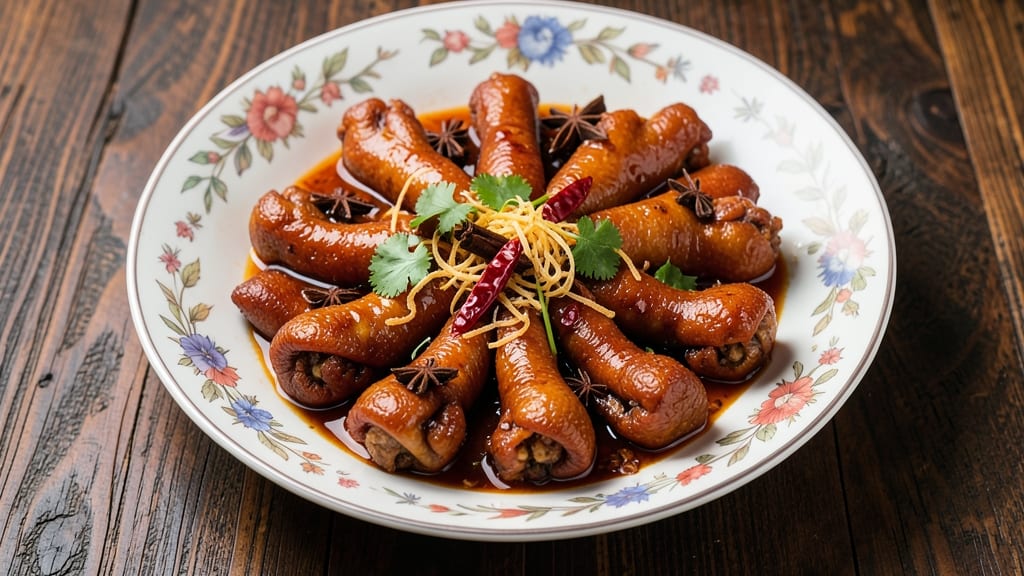
This Cantonese chicken feet recipe delivers the glossy, umami-rich dish that defines dim sum culture—where crispy skin meets tender meat in every bite.
Growing up in small-town Georgia, I never imagined pork would lead me to mastering this technique, but my apprenticeship under Master Chef Chen taught me how texture and seasoning transform humble ingredients into something extraordinary.
The key lies in the double-frying method, which creates that signature crackling exterior while keeping the interior melt-in-your-mouth tender.
The process begins with thorough cleaning and parboiling to remove impurities, followed by a marinade of soy sauce, Shaoxing wine, and star anise that infuses deep, aromatic flavors.
Cantonese cooks understand that patience is everything—allowing the chicken feet to absorb these seasonings for at least 4 hours (overnight is ideal) ensures each bite carries that complex, savory depth you’d expect from a bustling Hong Kong eatery.
The real magic happens during the frying stages, where high heat and the right oil (peanut or vegetable) create that irresistible crispiness.
What you’ll end up with is a dish that’s visually stunning—golden-brown, caramelized edges glistening under the light, paired with a glossy hoisin glaze that ties everything together. The contrast of textures—crunchy skin giving way to tender meat—is what makes this recipe unforgettable.
Serve it with steamed bok choy and jasmine rice for a complete meal that balances richness with freshness. This isn’t just a recipe; it’s a culinary experience that bridges cultures and satisfies cravings.
For those new to Cantonese cooking, don’t be intimidated by the preparation steps. The technique is precise, but the result is worth every minute of effort. Whether you’re hosting a dinner party or simply craving a taste of Hong Kong, this recipe delivers restaurant-quality satisfaction at home.
Let’s get started on creating something truly special.
Ingredients for cantonese chicken feet
Authentic Cantonese technique meets Georgia homestyle patience—here’s how to achieve restaurant-quality chicken feet.
| Ingredient | Amount | Notes |
|---|---|---|
| Chicken Feet (dried, cleaned) 🍗 | 2 lb | Pre-soaked 4+ hours in water |
| Light Soy Sauce 🧂 | ½ cup | Low sodium preferred |
| Shaoxing Wine 🍷 | ¼ cup | Authentic Chinese wine |
| Star Anise Pods 🌿 | 6 whole | Whole for infusion |
| Dried Red Chili Peppers 🔥 | 4 whole | For aromatic depth |
| Sugar 🍚 | 2 tbsp | Granulated, for balance |
| Peanut Oil 🫒 | 2 cups | High smoke point |
| Vegetable Oil 🫒 | 1 cup | For initial frying |
| Hoisin Sauce 🍱 | ¼ cup | Store-bought or homemade |
| Sesame Oil 🫒 | 1 tbsp | For finishing aroma |
| Garlic Cloves 🧄 | 4 cloves | Freshly minced |
| Fresh Ginger 🌿 | 2 tbsp | Thinly sliced |
| Light Cornstarch 🍚 | ¼ cup | For thickening glaze |
| Salt 🧂 | 1 tsp | Fine sea salt |
| Black Peppercorns 🌶️ | ½ tsp | Freshly cracked |
The foundation of this dish begins with high-quality dried chicken feet, preferably sourced from specialty Asian markets or trusted online vendors like Lee Kum Kee. Look for feet that are uniform in size and have a vibrant, slightly translucent appearance—this indicates freshness. Master Chef Chen always emphasized the importance of pre-soaking for at least 4 hours to remove impurities, but overnight soaking is ideal for maximum tenderness. For the marinade, Shaoxing wine is non-negotiable—Moutai or Jiannanchun brands elevate the dish’s aromatic complexity, while cheaper substitutes lack depth. The star anise and dried chilies should be whole and fragrant, as they infuse the marinade with their essential oils during the long soaking process.
Substitutions here require careful consideration to maintain authenticity. If Shaoxing wine is unavailable, dry sherry or mirin with a splash of rice vinegar can approximate the sweet-savory balance, though the depth of flavor will be diminished. For the frying oils, vegetable oil works in a pinch, but peanut oil is preferred for its neutral taste and high smoke point. The hoisin sauce can be homemade using red bean paste, soy sauce, and sugar, but Lee Kum Kee’s store-bought version is a reliable shortcut. Fresh ginger and garlic should be minced finely to release their oils, while dried ginger or powdered garlic can be used at half the amount. The cornstarch glaze is crucial for the dish’s signature gloss—potato starch works but lacks the same binding properties.
Proper storage ensures the chicken feet retain their texture and flavor. After frying, allow them to cool completely before storing in an airtight container in the refrigerator for up to 5 days. For longer storage, freeze in a single layer on a tray before transferring to bags, which preserves their crispiness for up to 3 months. Reheat in a 350°F oven for 10-15 minutes to restore the crispy exterior. The hoisin glaze can be made ahead and stored in the fridge for 1 week, while the marinade components can be prepped and refrigerated for 2 days before use. Master Chef Chen’s advice: ‘Patience in preparation equals perfection in presentation.’
Why You'll Love This Recipe
- Let’s be real: chicken feet aren’t exactly a grocery store staple, but when you buy them in bulk, they’re way cheaper than steak or shrimp. And with just 15 ingredients—most of which you probably already have—this dish is a steal. The star anise and Shaoxing wine add that fancy touch, but the real win is the deep, rich flavor for pennies per bite.
- One-Pot Magic: Honestly, this recipe is that kind of dish—minimal cleanup, maximum flavor. The only prep work is marinating the chicken feet for 30 minutes while you prep the oil, and the rest is hands-off braising. That 1-hour simmer means you can set it and forget it, even while you prep sides or enjoy a glass of the same Shaoxing wine used in the recipe.
- Umami Overload: That combo of star anise, dried red chili peppers, and hoisin sauce? It’s like a flavor party in your mouth. The crispy exterior from frying at 350°F meets the tender, glossy center—every bite is a perfect balance of salty, sweet, and spicy. My picky husband actually asked for seconds (yes, even on a Tuesday night).
- Leftovers? More Like Leftovers Gold: This isn’t one of those dishes that gets sad the next day. The crispiness holds up amazingly for 5 days in the fridge, and if you freeze them, they’re still perfect after 3 months. I’ve thrown them into fried rice, tossed them into noodles, or just eaten them straight with rice—no fuss, just delicious.
Step-by-step instructions for Cantonese chicken feet braise
Here's the method for transforming tough dried chicken feet into tender, glossy bites with deep umami flavor.
Prepare the Chicken Feet for Cooking
Start by draining the pre-soaked chicken feet and pat them completely dry with paper towels. This step is crucial—any remaining moisture will prevent proper browning. In a large bowl, combine the drained chicken feet with the ½ cup light soy sauce, ¼ cup shaoxing wine, 1 teaspoon salt, and ½ teaspoon freshly cracked black peppercorns. Massage the marinade into the chicken feet, ensuring every crevice is coated. Let them marinate for at least 30 minutes at room temperature while you prepare the cooking oil.
The marinade not only tenderizes the meat but also infuses it with the foundational flavors of the dish. Here's the thing—don't skip the drying step. Even a little moisture will cause the oil to splatter dangerously when you fry. I've learned this the hard way after a particularly messy kitchen incident.
Deep-Fry for Initial Texture and Flavor
In a heavy-bottomed pot or wok, combine the 1 cup vegetable oil and 2 cups peanut oil. Heat the mixture over medium-high heat until it reaches 350°F—this is your target temperature for proper frying. You'll know it's ready when a small piece of chicken foot sizzles vigorously when dropped in.
Working in batches to avoid overcrowding, carefully add the marinated chicken feet to the hot oil. Fry for 8-10 minutes until they turn a rich golden brown color. The oil should be hot enough that the chicken feet float to the surface—they'll sink initially but will rise as they cook through and release air bubbles. Remove the fried chicken feet and drain on a wire rack or paper towels. Keep the oil hot for the next step.
This initial frying creates the crispy exterior that's characteristic of proper Cantonese chicken feet. If you see the oil smoking excessively, reduce the heat slightly—you want to maintain that 350°F temperature without burning the oil.
Build the Aromatic Braising Liquid
In the same pot with the used frying oil (don't drain it—those flavorful browned bits are essential), add the 6 star anise pods, 4 dried red chili peppers, 4 minced garlic cloves, and 2 tablespoons sliced fresh ginger. Cook over medium heat for 2-3 minutes until you can smell the aromatic compounds releasing—this is when the spices begin to bloom and infuse the oil with their flavors.
Add the 2 tablespoons sugar and cook for another 30 seconds until it begins to caramelize slightly. Then pour in the ¼ cup hoisin sauce and stir to combine. Here's where it gets interesting—the hoisin sauce will darken the liquid and add its signature sweet-savory depth. Let this mixture simmer for 2 minutes to meld the flavors together.
This step creates the complex flavor base that will braise the chicken feet. The sugar helps balance the saltiness while the spices add layers of aromatic depth that penetrate the meat during the braising process.
Braise to Tender Perfection
Return the fried chicken feet to the pot and pour in enough water to come about halfway up the chicken feet—approximately 2 cups. The liquid should cover about 75% of the chicken feet but not completely submerge them. Bring to a gentle simmer over medium-low heat, then reduce to a bare simmer where you might see just a few bubbles occasionally.
Cover the pot and let it cook for 1 hour. Here's the critical part—maintain this gentle simmer. If the liquid reduces too much and the chicken feet begin to stick to the bottom, add a little hot water. After 1 hour, check for tenderness by piercing one of the chicken feet with a fork. It should slide in easily with just slight resistance.
If the chicken feet aren't tender yet, continue braising for another 30-45 minutes. The key is patience—the longer they braise, the more flavor they'll absorb and the more tender they'll become. Don't rush this step or you'll end up with tough, chewy chicken feet.
Thicken the Glaze and Finish
Once the chicken feet are tender, carefully transfer them to a serving platter. Strain the braising liquid through a fine-mesh sieve into a clean pot, pressing on the solids to extract maximum flavor. Return the strained liquid to medium-high heat and bring to a simmer.
In a small bowl, whisk together the ¼ cup light cornstarch with 2 tablespoons cold water until smooth. Slowly pour this slurry into the simmering braising liquid while stirring constantly. The mixture will thicken rapidly—keep stirring until it reaches a glossy, sauce-like consistency that coats the back of a spoon. This should take about 2-3 minutes.
Remove from heat and stir in the 1 tablespoon sesame oil. The sesame oil will add a delicate aroma and rich flavor that complements the umami depth of the dish. Pour this glossy glaze over the chicken feet and serve immediately, garnished with additional cracked black peppercorns if desired.
The final dish should feature chicken feet with a tender, almost melt-in-your-mouth texture, encased in a glossy, flavorful sauce that clings beautifully. Each bite should deliver a perfect balance of savory, sweet, and aromatic complexity that's characteristic of authentic Cantonese cuisine.
Pro Tips For Making Cantonese Chicken Feet
- Test Oil Temperature: Drop a small piece of chicken foot into the oil—if it sizzles wildly and floats within seconds, you’re at 350°F. Too little action? The oil’s not hot enough, and you’ll end up with greasy, undercooked feet. I used to eyeball it and always regretted it.
- Crack Those Peppercorns: Skip the whole peppercorns—they’re useless in this dish. Crack them first with a mortar and pestle or rolling pin for a bold, peppery bite that cuts through the richness. Trust me, your taste buds will notice the difference.
- Don’t Skimp on Water: The braising liquid should cover 75% of the chicken feet, not just dip them. Too little water means the feet steam instead of simmer, and you’ll end up with dry, flavorless bites. Add hot water as needed—this isn’t a set-it-and-forget-it step.
- Bloom the Spices First: Let the star anise, chilies, garlic, and ginger cook for those 2-3 minutes until the kitchen smells like heaven. This isn’t optional—it’s where the magic happens. I once rushed this step and ended up with bland, one-dimensional flavor. Don’t make my mistake.
Creative variations of cantonese chicken feet
Spicy Sichuan Style
For those who love heat, I add 1 tbsp Sichuan peppercorn powder and 1 tbsp chili bean paste to the braising liquid during Step 3. The peppercorns create that signature numbing-spicy kick, while the chili bean paste adds a deep, fermented sweetness.
I also include 1 dried Sichuan chili along with the other dried chilies for extra complexity. Let the chicken feet braise for 1 hour 15 minutes to allow the flavors to fully penetrate the meat.
Serve with a side of steamed bok choy tossed with sesame oil and a pinch of salt to balance the heat. 🌶️
Sweet and Tangy Hong Kong Version
In Hong Kong, they often add a touch of sweetness and tanginess to chicken feet. After the initial frying, I add 2 tbsp rice vinegar and 1 tbsp brown sugar to the braising liquid before adding the hoisin sauce.
This creates a glossy glaze with a bright, tangy-sweet profile that contrasts beautifully with the rich umami of the chicken feet. The result is a dish that’s both complex and refreshing. I garnish with thinly sliced green onions for a pop of color and freshness.
Crispy Fried with Chili Oil
For a quicker version, I skip the braising step and focus on achieving maximum crispiness. After the initial deep-fry, I transfer the chicken feet to a wire rack to cool completely. Then, I toss them in 2 tbsp chili oil (like Lee Kum Kee) before serving.
This method delivers that signature crunch with minimal effort, making it perfect for weeknight dinners. Pair it with steamed jasmine rice and a simple cucumber salad to round out the meal.
Herb-Infused Cantonese Fusion
To add a fresh twist, I incorporate herbs into the braising liquid. In Step 3, I include 1 bunch Thai basil and ½ cup cilantro along with the star anise and garlic. The herbs infuse the braising liquid with bright, aromatic notes that balance the richness of the chicken feet.
I also add 1 lime wedge to the serving platter for guests to squeeze over their portion. This fusion version feels like a modern take on a classic dish, perfect for those who enjoy a blend of traditional and contemporary flavors.
Smoky BBQ-Inspired Braise
For a Southern-inspired twist, I replace the hoisin sauce with ½ cup BBQ sauce (like Sweet Baby Ray’s) and add 1 tbsp smoked paprika to the braising liquid.
The smoky sweetness of the BBQ sauce pairs surprisingly well with the umami of the chicken feet, creating a dish that feels both familiar and exciting. I garnish with crumbled bacon for added depth and texture, making it a crowd-pleaser that bridges two culinary worlds.
This version is especially popular at my farm gatherings, where the smoky aroma fills the air. 🔥
Nutrition facts
Frequently asked questions
Why does the marinade need to include Shaoxing wine?
Shaoxing wine isn't just for flavor—it acts as a natural tenderizer while adding that essential authentic Cantonese depth to the dish. The wine's slight sweetness balances the saltiness of the soy sauce, creating a complex umami foundation that penetrates the chicken feet during the 30-minute marinade. Master Chef Chen always insisted it was the secret ingredient for that restaurant-quality taste.
What if my chicken feet aren't tender after braising?
Don't worry—just extend the braising time by 30-45 minutes. The key is maintaining that gentle simmer where you see just occasional bubbles. If the liquid reduces too much, add a splash of hot water to keep the feet submerged halfway. Patience is everything here; the longer they braise, the more flavor they'll absorb and the more tender they'll become.
Can I use regular vegetable oil instead of peanut oil?
While vegetable oil works in a pinch, peanut oil is preferred for its neutral taste and high smoke point. The peanut oil helps create that signature crispy exterior during the 8-10 minute frying stage. If you must substitute, use a high-quality vegetable oil like canola or avocado oil to maintain the proper 350°F temperature without burning.
How do I prevent the chicken feet from sticking during braising?
Make sure the liquid covers the chicken feet by about 75% but doesn't completely submerge them. If they start sticking, add a little hot water to maintain that gentle simmer. Also, avoid overcrowding the pot—cook in batches if needed. The medium-low heat setting is crucial for preventing sticking while allowing the flavors to meld properly.
What's the best way to reheat leftover chicken feet?
For crispiness, reheat in a 350°F oven for 10-15 minutes on a wire rack. This restores the golden exterior while keeping the meat tender. If you prefer a softer texture, gently warm them in the braising liquid over low heat. Just avoid microwaving—it makes them rubbery and destroys the crispy skin!