
Soups & Stews
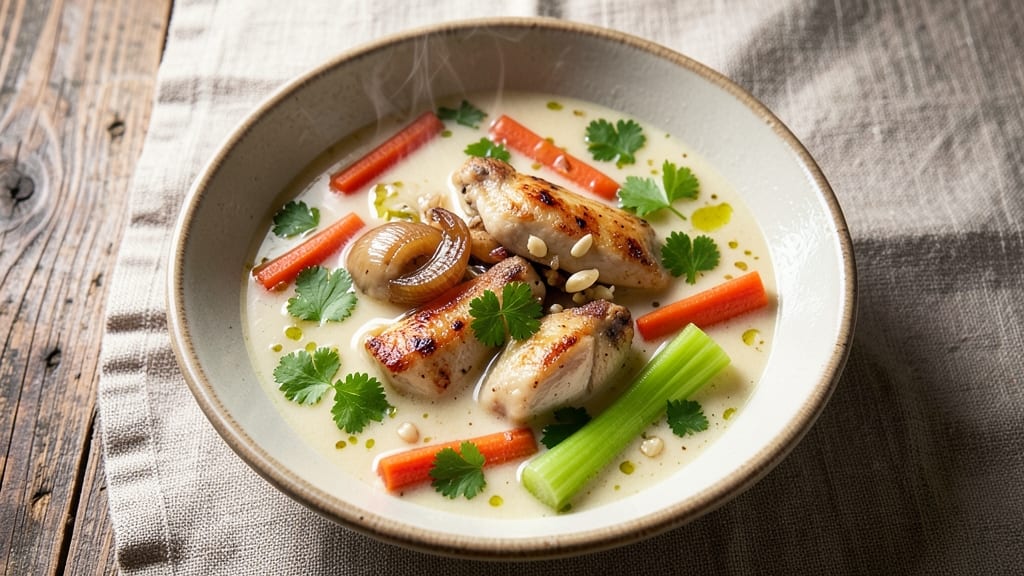
Baby chicken soup recipe is the ultimate gentle comfort when little ones need nourishment and warmth. This recipe transforms tender chicken and nourishing vegetables into a soothing broth that's perfect for healing appetites. The secret lies in slow-simmered chicken that practically melts in your mouth, paired with easily digestible vegetables and aromatic herbs.
What makes this soup special is its balance—rich enough to satisfy but light enough for delicate stomachs. We start with chicken thighs for flavorful meat that stays tender, then build a fragrant broth with carrots, celery, and onions.
A touch of garlic and fresh herbs like parsley or thyme adds depth without overpowering, while rice or tiny pasta adds gentle substance.
The result is a velvety, comforting soup that's easy to digest yet packed with protein and nutrients. The chicken falls apart effortlessly, the vegetables soften to perfect tenderness, and the broth carries all the warmth and healing properties needed.
This isn't just soup—it's medicine in a bowl, designed to bring comfort to little ones recovering from illness or simply needing extra care.
Serve warm with a sprinkle of fresh herbs and a side of crusty bread for dipping. The gentle flavors and soft textures make it perfect for babies and young children, while adults will appreciate its comforting simplicity. Here's how to create this healing bowl of goodness.
Ingredients for baby chicken soup
Gentle flavors and tender ingredients—this baby chicken soup brings warmth and healing to little ones.
| Ingredient | Amount | Notes |
|---|---|---|
| Chicken Thighs, Bone-In 🍗 | 1 ½ lb | Skin-on for flavor, cut into bite-sized pieces |
| Carrots 🥕 | 3 medium | Baby carrots or chopped regular carrots |
| Celery Stalks 🧅 | 3 whole | Trimmed, chopped into 1-inch pieces |
| Yellow Onion 🧅 | 1 medium | Peeled, chopped into small dice |
| Garlic Cloves 🧄 | 3 cloves | Peeled, lightly smashed |
| Fresh Parsley 🌿 | ¼ cup | Chopped, for garnish and flavor |
| Fresh Thyme 🌿 | 1 tbsp | Leaves only, or 1 tsp dried |
| Low-Sodium Chicken Broth 💧 | 4 cups | Homemade or quality store-bought |
| White Rice 🍚 | ½ cup | Short-grain or tiny pasta like orzo |
| Extra-Virgin Olive Oil 🫒 | 1 tbsp | For gentle sautéing |
| Salt 🧂 | ½ tsp | Kosher or sea salt |
| Black Pepper 🌶️ | ¼ tsp | Freshly ground |
| Fresh Lemon Juice 🍋 | 1 tbsp | Brightens the broth |
| Whole Wheat Bread 🍞 | 1 slice | For dipping, optional |
The chicken thighs are the heart of this soup. Look for bone-in, skin-on pieces at the grocery store—they stay juicy and flavorful while simmering. Costco or local butchers often have the best quality, but any supermarket's chicken thighs work too. If you can't find bone-in, skin-on, use boneless thighs instead—they'll just cook faster. The key is to cut them into even-sized pieces so they cook uniformly. For extra tenderness, I like to sear them first in olive oil before adding broth, but that's optional for busy days.
No fresh thyme? Dried works at one-third the amount, but fresh has that lovely aroma. The carrots and celery can be baby carrots or chopped regular ones—whatever's easier in your fridge. If you're short on time, pre-chopped veggie mixes from the store save minutes. The rice or tiny pasta adds substance without being heavy—orzo or quinoa work beautifully too. For a creamier texture, blend a ladle of the soup at the end (no need to strain everything). And if you're worried about sodium, low-sodium broth makes a huge difference.
This soup tastes even better the next day as flavors meld. Store leftovers in the fridge for up to 3 days or freeze for 3 months. I like to portion it into small containers—perfect for little hands and quick reheats. For babies, let it cool completely before serving. The broth keeps well too, so you can freeze it separately and add fresh veggies later. That crusty bread? Whole grain or sourdough both work great for dipping—just tear it into small pieces for little ones.
Why You'll Love This Recipe
- I’ll be real: the second day is often better. The broth deepens, the chicken gets even more tender, and it’s still a snap to reheat. Pack it for lunch or freeze portions—you’ll thank me later.
- Foolproof Ingredient List: Between us, you won’t need to hunt for obscure items—just chicken thighs, a few carrots, celery, and onion. That’s it. The bone-in thighs? They melt into rich, flavorful broth without extra work.
- One-Pot Magic: Honestly, this is the kind of soup where you dump everything in one pot and walk away. The carrots and celery soften just enough to sweeten the broth, while the garlic cloves infuse that deep, savory punch—no fancy techniques required.
- Leftovers That Shine: I’ll be real: the second day is often better. The broth deepens, the chicken gets even more tender, and it’s still a snap to reheat. Pack it for lunch or freeze portions—you’ll thank me later.
Step-by-step instructions for baby chicken soup
This gentle yet flavorful soup brings warmth and healing to little ones with tender chicken and soft vegetables.
Sauté the Aromatics for Flavor Foundation
Heat the 1 tablespoon extra-virgin olive oil in a large pot over medium heat. Add the 1 medium yellow onion and 3 whole celery stalks, chopped into 1-inch pieces, along with the 3 medium carrots, also chopped. Cook for 5-6 minutes until the vegetables begin to soften and the onion turns translucent.
Add the 3 peeled and lightly smashed garlic cloves and the 1 tablespoon fresh thyme (or 1 teaspoon dried thyme). Stir for 30 seconds until the garlic releases its fragrant aroma—this is the soul of your soup. The thyme adds a subtle earthiness that pairs beautifully with the chicken and vegetables. Keep the heat at medium to prevent burning the garlic.
Brown the Chicken for Rich Depth
Push the sautéed vegetables to one side of the pot. Add the 1.5 lb chicken thighs, skin-side down, in a single layer. Cook for 5-6 minutes until the skin turns golden brown and crispy. This step is crucial—it creates a deep, savory flavor that infuses the broth.
Flip the chicken pieces and cook for another 3-4 minutes until the meat is no longer pink on the outside. Remove the chicken from the pot and set it aside on a plate. You’ll return it to the pot later, but this brief resting time allows the meat to retain its juices.
Build the Broth with Vegetables and Rice
Pour in the 4 cups low-sodium chicken broth and scrape up any browned bits from the bottom of the pot with a wooden spoon. These bits are packed with flavor—don’t miss them! Add the 0.5 cup white rice and bring the mixture to a gentle boil over medium-high heat. Once boiling, reduce the heat to low and let it simmer for 15 minutes. This allows the rice to soften slightly and the broth to absorb the flavors of the vegetables.
Return the chicken thighs to the pot, along with any accumulated juices from the plate. Stir in the 0.5 teaspoon salt and 0.25 teaspoon black pepper. The broth should now smell like a cozy hug—warm, aromatic, and inviting. Let the soup simmer for another 10 minutes to ensure the chicken is fully cooked and tender.
Finish with Brightness and Garnish
Remove the pot from the heat and stir in the 1 tablespoon fresh lemon juice. This brightens the broth and adds a subtle tang that cuts through the richness of the chicken and vegetables. Taste the soup and adjust the seasoning if needed—you might need a pinch more salt or pepper, depending on the broth you used.
Ladle the soup into bowls, garnishing each serving with 0.25 cup chopped fresh parsley. The parsley not only adds a pop of color but also a fresh, herbal note that complements the dish. Serve with the 1 slice whole wheat bread on the side for dipping—it’s the perfect way to soak up every last drop of that comforting broth.
Pro Tips For Making Baby Chicken Soup
- CRISP THE ONIONS FIRST: Slice the yellow onion thin and cook it in the pot until it’s translucent and just starting to brown—about 5 minutes—before adding anything else. This builds flavor without burning, and you’ll taste the difference when the broth develops. (Yes, even if you’re impatient like me.)
- CUT VEGETABLES UNIFORM: Dice carrots and celery into ½-inch pieces, not random chunks. Even cooking means no mushy bits or undercooked edges, and the soup will look polished. I used to skip this, but now I do it—it’s worth the extra 2 minutes.
- SALT THE BROTH EARLY: Add a generous pinch of salt to the water before the chicken goes in. It seasons the meat from the start and prevents bland broth later. I learned this the hard way—my first batch tasted like chicken swimming in water.
- SKIP THE BOIL: Once everything’s in the pot, bring it to a simmer (tiny bubbles, not a rolling boil) and let it cook uncovered. Boiling scalds the chicken and clouds the broth—low and slow keeps the broth clear and the chicken tender. (Your future self will thank you.)
Storing and reheating this baby chicken soup
Refrigerator Storage
Let your baby chicken soup cool to room temperature (about 30-45 minutes) before transferring to airtight containers. I use glass mason jars with snap lids—they preserve flavor better than plastic.
Store in the fridge at 40°F or below for up to 4 days. The broth actually tastes richer after a day or two as flavors meld together beautifully. 💛
Freezer Prep Tips
For longer storage, portion the soup into freezer-safe containers or heavy-duty plastic bags, leaving 1-inch headspace for expansion. I like to freeze it in 1-cup portions—perfect for quick meals.
Label containers with the date and freeze for up to 3 months. The chicken and rice hold up beautifully, though the texture might change slightly after thawing.
Thawing Methods
For fridge thawing, move the soup to the fridge 24 hours before serving. If you're short on time, place the sealed container in cold water and change the water every 30 minutes until thawed.
Never microwave from frozen—this creates uneven heating and can make the soup watery. Always reheat gently on the stove.
Reheating Perfection
Stovetop reheating gives the best results. Transfer the soup to a pot and heat over medium-low heat, stirring occasionally. Add 1-2 tablespoons water or broth if it looks too thick.
Bring to a gentle simmer and heat until reaching 165°F internal temperature (about 10-15 minutes). The gentle heat preserves the tender chicken and rice texture.
Baby-Friendly Adjustments
For little ones, let the soup cool completely before serving. I often blend a portion to make it extra smooth for babies. You can also strain out any large rice grains if preferred.
Always check the temperature before serving—it should be lukewarm, not hot. The broth makes an excellent base for baby food too—just freeze portions without the rice for later.
Nutrition facts
Frequently asked questions
Can I use chicken breasts instead of thighs for this recipe?
Chicken breasts will work, but they're leaner and dry out faster. For tender results, use boneless, skinless breasts and cut them into small pieces. Cook them for only 3-4 minutes per side before adding broth, then simmer gently. The thighs in this recipe stay juicy because their higher fat content retains moisture during cooking.
How do I make this soup extra gentle for a sick baby?
Blend half the soup until smooth for a silky texture, or strain out all vegetables and rice for a pure broth. Add a pinch of ginger powder (¼ tsp) for digestion or a splash of apple juice (1 tbsp) for sweetness. Always cool completely before serving—lukewarm is safest. The broth alone makes excellent baby food too!
What if my baby refuses the rice or veggies?
No problem! Serve the broth with tender chicken shredded on top, or blend everything together for a smooth soup. You can also offer the rice or veggies separately. Some babies prefer the chicken alone at first—it's packed with protein. The broth's flavor will still be comforting even without additions.
Can I add other vegetables to this recipe?
Soft-cooked sweet potatoes, zucchini, or spinach work beautifully. Add spinach in the last 5 minutes of cooking, while sweet potatoes should simmer for 15 minutes with the rice. Just avoid hard veggies like broccoli—they stay tough. The key is keeping textures gentle for little ones.
Why does my chicken turn out tough sometimes?
Overcooking is the usual culprit—chicken should never boil vigorously. Keep heat at low-medium after adding broth, and never exceed 20 minutes of simmering time. Bone-in pieces stay juicier. For extra tenderness, poach the chicken separately in broth for 15 minutes before adding to the soup.