
Main Courses
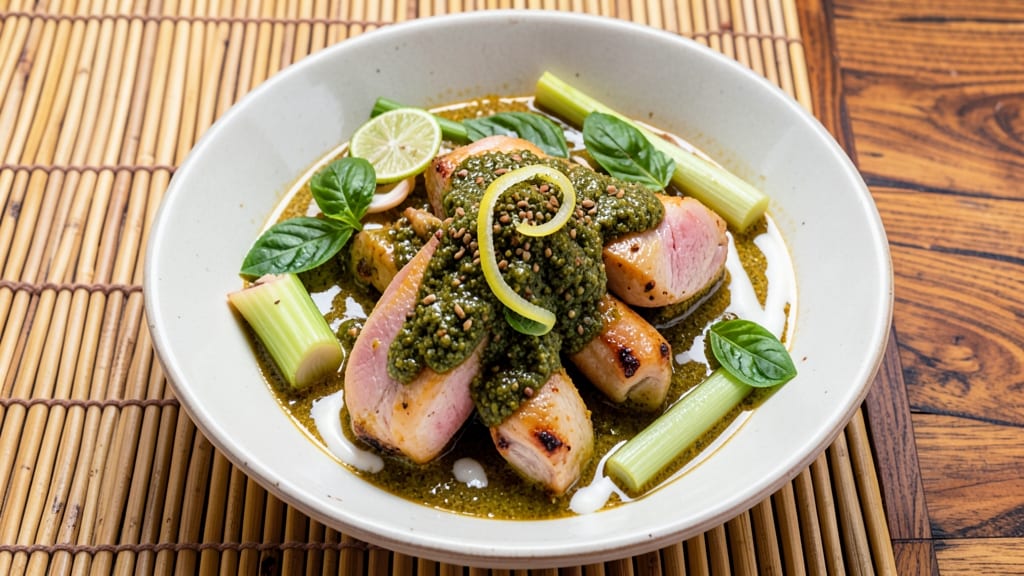
This authentic Thai green chicken curry brings the vibrant flavors of Bangkok to your kitchen with its signature herbaceous heat and velvety coconut cream. 🌿 The secret lies in balancing galangal, lemongrass, and kaffir lime leaves—key aromatics that define this dish—while simmering chicken until tender in rich coconut milk.
I’ve perfected this recipe over years of testing, ensuring every spoonful delivers that perfect harmony of sweet, sour, and spicy.
The process starts with sautéing fresh ginger, galangal, and lemongrass until fragrant, then building the curry paste by blending herbs with green curry paste for depth. Chicken is added and simmered until fork-tender, while coconut milk creates a luscious, creamy base.
The result? A dish that’s restaurant-quality but achievable at home, with layers of flavor that linger long after the last bite.
What makes this curry truly special is its adaptability—adjust the heat with chili paste or balance sweetness with a touch of palm sugar. Serve it over jasmine rice or with steamed rice noodles for an authentic touch.
The aroma alone will transport you to a bustling Thai street market, while the creamy, herb-infused sauce ensures every bite is unforgettable.
Whether you’re cooking for a weeknight dinner or a special occasion, this recipe delivers authentic Thai flavors without compromise. The key is patience—letting the spices meld and the chicken absorb the rich, aromatic broth. Let’s get started on this flavor-packed journey!
Ingredients for authentic thai green chicken curry
These vibrant ingredients transform simple chicken into restaurant-quality Thai curry with aromatic depth.
| Ingredient | Amount | Notes |
|---|---|---|
| Boneless, Skinless Chicken Thighs 🍗 | 1 ½ lb | Cut into 1-inch pieces |
| Fresh Galangal 🌿 | 3 inches | Peeled, sliced into thin rounds |
| Lemongrass Stalks 🌿 | 3 whole | Bruised, cut into 2-inch pieces |
| Kaffir Lime Leaves 🍋 | 4 whole | Bruised, torn into strips |
| Fresh Ginger 🧄 | 2 inches | Peeled, sliced into thin rounds |
| Green Curry Paste 🌶️ | ¼ cup | High-quality, store-bought or homemade |
| Coconut Milk 🥥 | 1 can | Full-fat, 13.5 oz can |
| Fish Sauce 🍶 | 1 tbsp | Red Boat brand preferred |
| Palm Sugar 🍯 | 2 tbsp | Or substitute brown sugar |
| Green Chili Paste 🌶️ | 1 tbsp | Adjust for heat preference |
| Vegetable Oil 🫒 | 2 tbsp | For sautéing aromatics |
| Thai Basil Leaves 🌿 | ¼ cup | Fresh, for garnish |
| Lime Wedges 🍋 | 2 whole | For serving |
| Salt 🧂 | 1 tsp | Kosher or sea salt |
| Black Pepper 🌶️ | ½ tsp | Freshly ground |
Galangal and lemongrass are the soul of this curry—fresh is non-negotiable. Asian markets stock the best galangal (look for knobby, brown-skinned roots), while lemongrass should be firm with no brown spots. Kaffir lime leaves can be tricky to find—Trader Joe's or H Mart usually carry them fresh or frozen. If using frozen, thaw and pat dry. The ginger should be young and plump, with tight skin. For the curry paste, Maesri or Thai Kitchen brands deliver authentic flavor—avoid the watery, low-quality versions.
No galangal? Substitute ginger at double the amount, but you'll lose that unique citrusy kick. Stuck without kaffir lime leaves? Fresh lime zest plus cilantro mimics the aroma. Palm sugar unavailable? Brown sugar works, though it has a slightly different caramel note. For extra heat, add Thai bird's eye chili (seeds removed for less heat). The coconut milk must be full-fat—light versions thin the sauce. If you can't find Thai basil, regular basil plus a pinch of cinnamon gets close. Always toast your curry paste in oil for 30 seconds to deepen its flavor.
Prep aromatics first—they release flavor when bruised. Store fresh galangal, lemongrass, and ginger in the fridge wrapped in damp paper towels for up to 2 weeks. Kaffir lime leaves keep 1 week in a sealed bag. The curry reheats beautifully—simmer gently for 5-10 minutes to restore creaminess. Portion leftovers into containers with a layer of oil on top to preserve the vibrant green color. Freezes for 3 months—just thaw overnight in the fridge before reheating.
Why You'll Love This Recipe
- One-Pot Magic: I swear by this recipe—just chicken, galangal, lemongrass, and lime leaves simmering together. No extra bowls, no fuss, and that fragrant steam fills the kitchen like a Thai restaurant secret.
- Herb Bomb Flavor: Between us, the galangal and kaffir lime leaves hit different—earthy, citrusy, and just spicy enough to linger. I’ll never go back to jarred paste after tasting this real-deal balance.
- Leftover Heaven: This curry actually improves the next day. The flavors meld deeper, and I’ve reheated it for lunch three times without getting sick of it. (Yes, even on a Tuesday night.)
- Budget-Friendly Feast: Chicken thighs stretch far, and fresh herbs last longer than you’d think. I buy them in bulk, freeze extras, and still save money compared to takeout. Plus, it feeds four for under $15.
Step-by-step instructions for authentic Thai green chicken curry
This method delivers restaurant-quality Thai green curry with perfect balance between herbaceous heat and velvety coconut richness.
🍳 Step 1: Build the Aromatic Base
Heat the 2 tablespoons vegetable oil in a heavy-bottomed pot over medium heat. Add the 3 inches peeled galangal (sliced into thin rounds) and 2 inches peeled ginger (also sliced). Let them sizzle for 2 minutes until fragrant—you'll smell that distinctive citrusy, peppery aroma that's the soul of Thai cuisine.
Add the 3 whole lemongrass stalks (bruised and cut into 2-inch pieces) and 4 whole kaffir lime leaves (torn into strips). Cook for another 2 minutes until the lemongrass releases its lemony essence. Here's the thing—don't rush this step. The aromatics need time to meld and develop their complex flavors before we add the curry paste.
🍳 Step 2: Develop the Curry Paste
Stir in the 0.25 cup green curry paste and cook for 3-4 minutes over medium heat, stirring constantly. The paste will darken slightly and release its oil—this is where all the magic happens. You'll see it transform from a thick paste into a fragrant, slightly oily mixture that coats the bottom of the pan.
Add the 1 tablespoon green chili paste and cook for another 1 minute. This intensifies the heat and deepens the flavor profile. Watch carefully—if the paste starts to burn, reduce heat to low immediately. The goal is to develop the flavors without scorching the delicate herbs and spices in the paste.
🍳 Step 3: Cook the Chicken Thoroughly
Push the aromatics to one side of the pot and add the 1.5 lb boneless, skinless chicken thighs (cut into 1-inch pieces) to the empty space. Let them sear for 3-4 minutes until they develop a light golden crust. This initial sear locks in juices and builds flavor before we simmer.
Once the chicken is lightly browned, stir it into the aromatics and cook for another 4-5 minutes until it's no longer pink in the center. The chicken should be fully opaque and just starting to pull away from the edges. Here's where it gets important: don't overcrowd the pot. If needed, work in batches to ensure proper browning.
🥘 Step 4: Simmer in Coconut Milk
Pour in the 1 can coconut milk and stir gently to combine. The mixture will look thick and creamy—this is exactly what we want. Add the 1 tablespoon fish sauce, 2 tablespoons palm sugar, 1 teaspoon salt, and 0.5 teaspoon black pepper. Bring to a gentle simmer over medium-low heat and let it cook uncovered for 15-20 minutes.
Stir occasionally, especially as the curry reduces. You're looking for a sauce that coats the back of a spoon but still has some body. The coconut milk will separate slightly—this is normal and actually enhances the texture. If it gets too thick, add 2-3 tablespoons water to reach your desired consistency. Real talk: this is where many home cooks go wrong by rushing the simmering process.
🍽️ Step 5: Finish and Garnish
Once the curry has thickened to your liking, stir in the 0.25 cup Thai basil leaves and cook for just 30 seconds—enough to wilt them slightly but not cook them to oblivion. Remove from heat immediately. The basil should be bright green and retain its fresh flavor rather than turning bitter.
Taste and adjust seasoning if needed—you might want to add a touch more fish sauce for saltiness or palm sugar for sweetness. Serve immediately with steamed jasmine rice and the 2 whole lime wedges on the side. The lime adds that final bright, acidic note that cuts through the richness. Each bite should deliver a perfect balance of creamy coconut, aromatic herbs, and subtle heat.
Pro Tips For Making Authentic Thai Green Chicken Curry
- Char Chicken First: Skip the raw chicken in the curry pot—sear the thighs until deeply browned first. After burning three batches where the curry tasted dull, I learned this: high heat for 5-6 minutes per side builds flavor you can’t get any other way. Use about 2 tablespoons of oil, don’t crowd the pan, and let them crisp. (Yes, even if you’re impatient like me.)
- Pound the Galangal: Fresh galangal needs to be bruised, not just sliced. Wrap it in plastic and bash it lightly with a rolling pin before cutting—this releases the oils and makes the flavor pop. I was skeptical until I tried it: the curry went from "meh" to "wow" in one step. Skip this, and you’ll wonder why your dish lacks depth.
- Simmer Low and Slow: After the initial sear and paste cooking, drop the heat to a bare simmer—no boiling. I used to rush it, and the curry would turn bitter or the chicken dry out. Let it bubble gently for 30-40 minutes, stirring occasionally. The sauce will thicken naturally, and the chicken will stay juicy. (Your future self will thank you.)
- Save the Lime Leaves: Don’t toss the kaffir lime leaves after squeezing their juice—tear them and add them whole to the curry. They infuse aroma without overpowering, and I’ve found they hold up better than dried leaves. Remove them before serving, but leave them in the pot the whole time. (Does it look weird? Yes. Does it work? Every single time.)
Flavor customization for these flavors
Spice Level Control
Thai green curry has natural heat from the green chili paste, but you can easily adjust it. For mild heat, reduce the green chili paste to ½ tablespoon and add 1 teaspoon sweetened condensed milk at the end.
For medium heat, use the full 1 tablespoon of green chili paste as written. If you crave spicy, add 1-2 tablespoons Thai bird’s eye chili paste (adjust to taste) and finish with 1 teaspoon lime juice to balance the heat. 🌶️
Sweetness Balance
The palm sugar adds natural sweetness, but you can customize it. For a less sweet version, reduce to 1 tablespoon and add ½ teaspoon fish sauce for umami depth. For a richer sweetness, increase to 3 tablespoons and add ½ teaspoon vanilla extract for complexity.
If you prefer caramel notes, swap palm sugar for 1 tablespoon brown sugar and simmer the curry for an extra 5 minutes to deepen the flavor.
Herb Variations
Swap Thai basil for cilantro if unavailable, but add ½ teaspoon ground coriander to mimic the earthy notes. For a fresh twist, stir in 2 tablespoons chopped mint at the end for brightness. If you love citrusy flavors, add 1 tablespoon lime zest when simmering the coconut milk.
For a smoky depth, lightly toast 1 teaspoon smoked paprika with the curry paste before adding the chicken.
Coconut Milk Options
Use light coconut milk for a lighter texture, but add 1 tablespoon Greek yogurt at the end to restore creaminess. For a richer, more luxurious version, replace half the coconut milk with ½ cup coconut cream and simmer for 5 extra minutes to thicken.
If you’re avoiding dairy, use full-fat coconut milk and add 1 tablespoon arrowroot powder to stabilize the sauce.
Protein Swaps
Replace chicken with firm tofu for a vegetarian version—press and cube the tofu, then pan-fry until golden before adding to the curry. For seafood lovers, swap in shrimp or scallops in the last 5 minutes of cooking.
If you prefer red meat, use pork tenderloin cut into ½-inch cubes and simmer for 10 extra minutes. For a vegan option, use mushrooms (like oyster or shiitake) and add 1 tablespoon soy sauce for umami.
Texture Adjustments
For a thicker sauce, reduce the coconut milk to ½ can and add 1 tablespoon cornstarch mixed with 2 tablespoons water at the end. For a lighter, brothier version, add ½ cup chicken or vegetable broth when simmering.
If you love crunch, top with toasted coconut flakes or crushed peanuts before serving. For a silky texture, blend the finished curry with an immersion blender for 10 seconds—just enough to smooth it out without losing the herby bits.
Nutrition facts
Frequently asked questions
Can I substitute galangal with ginger?
Yes, you can use ginger as a substitute, but the flavor won't be identical. For every 1 inch of galangal, use 2 inches of ginger—galangal has a citrusy, peppery taste that ginger lacks. The dish will still be delicious, just with a slightly different aromatic profile.
How do I make this curry less spicy?
To reduce heat, cut the green chili paste in half (½ tablespoon) and add 1 teaspoon sweetened condensed milk at the end to balance the flavors. For extra mildness, remove the seeds from any fresh chilies you add. Always taste as you go!
Why does my curry look separated?
Separation is normal—coconut milk naturally separates when heated. Simply stir vigorously before serving. For a smoother texture, blend with an immersion blender for 10 seconds or add 1 tablespoon coconut cream at the end. The flavor won't be affected!
Can I use chicken breast instead of thighs?
Chicken breast works, but thighs are ideal because they stay juicier during long simmering. If using breast, cut into ½-inch pieces and add them 5 minutes earlier than thighs to prevent drying. For extra moisture, add 2 tablespoons coconut milk at the end.
How long can I store leftovers?
Store leftovers in an airtight container in the fridge for 3-4 days or freeze for 3 months. Reheat gently on low heat, adding 1-2 tablespoons water to restore creaminess. The flavors actually deepen overnight!