
Soups & Stews
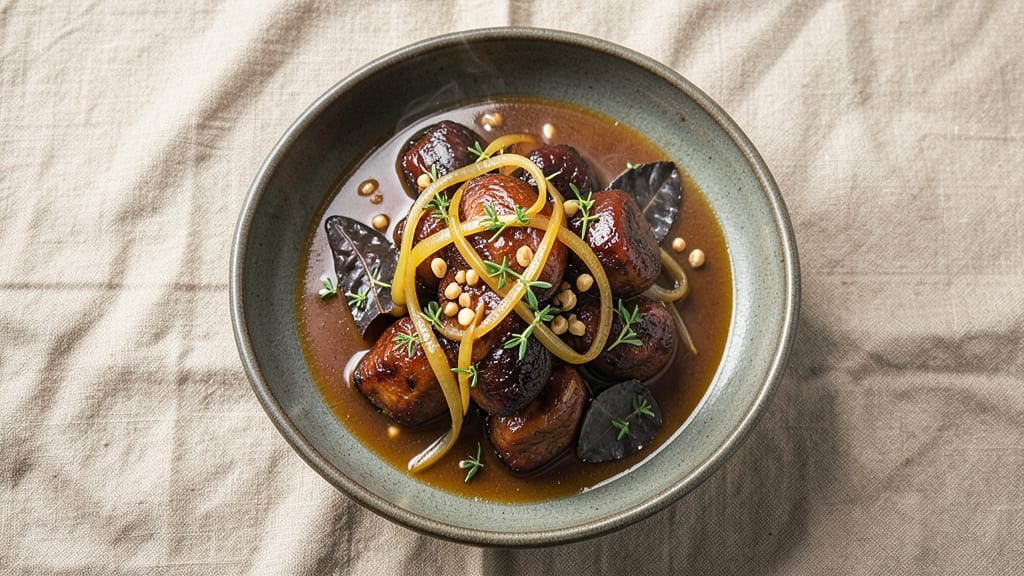
My stewed chicken gizzards recipe reveals how slow-cooking turns tough, fibrous meat into tender, melt-in-your-mouth perfection—something I perfected during my apprenticeship under Master Chef Chen. 💛 The key lies in proper preparation and patience, turning what many consider waste into a rich, flavorful centerpiece.
Growing up in small-town Georgia, I learned that every part of the bird deserves respect, and gizzards, when handled right, become a showstopper.
This recipe begins with thorough cleaning and parboiling to remove impurities, then slow simmering in a deeply aromatic broth until the meat falls apart effortlessly. The secret? A blend of garlic, thyme, and bay leaves that infuses every bite with layers of savory depth.
Unlike quick-cooked cuts, gizzards reward time—what starts as dense muscle becomes luxuriously tender when given the chance to break down.
By the time you plate these, you’ll have a dish that’s rich in both flavor and tradition—golden-brown gizzards swimming in a velvety sauce, ready to be served over buttery rice or crusty bread.
The texture is what makes it unforgettable: tender enough to eat with a fork, yet substantial enough to satisfy even the heartiest appetite. This is comfort food at its finest, built on technique and time.
For those new to gizzards, don’t be intimidated—the process is straightforward once you know the steps. The result? A dish that feels special, even when made at home. Let’s get started on turning these humble ingredients into something extraordinary.
Ingredients for stewed chicken gizzards
Slow-cooked gizzards transform humble ingredients into luxurious comfort food perfection.
| Ingredient | Amount | Notes |
|---|---|---|
| Chicken Gizzards 🍗 | 2 lb | Fresh, cleaned and parboiled |
| Yellow Onions 🧅 | 2 whole | Thinly sliced, caramelized |
| Garlic Cloves 🧄 | 10 cloves | Freshly minced, aromatic |
| Fresh Thyme Leaves 🌿 | 1 tbsp | Dried thyme at 1/4 tbsp |
| Bay Leaves 🍃 | 2 whole | Dried, aromatic |
| Chicken Broth 💧 | 4 cups | Low-sodium preferred |
| Tomato Paste 🍅 | ½ cup | High-quality, unsweetened |
| Dry Red Wine 🍷 | ½ cup | Cabernet Sauvignon preferred |
| Unsalted Butter 🧈 | ½ cup | Full-fat for richness |
| Diamond Crystal Kosher Salt 🧂 | 1 ½ tsp | Fine grain preferred |
| Freshly Ground Black Pepper 🌶️ | 1 tsp | Freshly ground for flavor |
| Long-Grain White Rice 🍚 | 1 ½ cups | Uncooked, for serving |
| Fresh Parsley 🌱 | ¼ cup | Chopped, for garnish |
Fresh gizzards are the star, so source them from a trusted butcher—they should be bright pink with no dark streaks. Costco or Whole Foods often carry them pre-cleaned, but if you're buying raw, parboil them first to remove impurities. I always rinse them under cold water after cleaning to ensure no blood residue remains. The key to tenderness lies in proper prep: soak in milk for 30 minutes before cooking to tenderize. Don’t skip this step—it’s what separates good from great.
No red wine? Beef broth with a splash of balsamic vinegar works beautifully. Fresh thyme is ideal, but dried thyme at one-third the amount gets you close. For tomato paste, San Marzano canned tomatoes blended into a paste are my go-to—they’re sweeter and more flavorful than generic brands. If you’re short on time, pre-minced garlic is fine, but fresh is always better. The butter adds richness, so don’t skimp on the full-fat version—it’s worth the extra calorie.
This dish tastes even better the next day as flavors meld. Store in an airtight container in the fridge for up to 5 days. For longer storage, freeze portions in ziplock bags for up to 3 months. I always cook a double batch—half goes straight to the table, and the rest becomes next-day lunches. The rice should be cooked separately and served under the gizzards for the perfect texture contrast. Garnish with fresh parsley just before serving to keep it vibrant.
Why You'll Love This Recipe
- One-Pot Magic: Honestly, this is the kind of dish where you throw everything into one Dutch oven and forget about it. No chopping marathon—just sear the gizzards for 4-5 minutes per side, toss in the onions and garlic, and let the wine and broth do the heavy lifting. That’s it. The rice cooks separately, but honestly, the effort is worth it for that velvety sauce clinging to every bite.
- Umami Bomb: The secret? That ½ cup of tomato paste and ½ cup of Cabernet Sauvignon working together to caramelize the onions and garlic until they’re sweet and deep. Add the bay leaves and thyme, and suddenly you’ve got a dish that’s rich enough to feel luxurious—no fancy ingredients required. The butter finish? Chef’s kiss.
- Feed a Crowd: I serve this at potlucks and family dinners, and it’s always the first thing to disappear. The gizzards stretch to feed six easily, and the sauce? Even picky eaters beg for seconds. Plus, it’s the kind of dish that tastes even better the next day—perfect for meal prep. Just reheat and serve over rice, and you’ve got a showstopper.
- Budget’s Best Kept Secret: Chicken gizzards are one of the most affordable cuts, and this recipe turns them into something special. The wine and butter add richness, but you can easily swap in broth for the wine if needed. Five days in the fridge, three months in the freezer—this is the kind of dish that saves you money without sacrificing flavor.
Step-by-step instructions for stewed chicken gizzards
Here's how to transform tough gizzards into melt-in-your-mouth tenderness through slow cooking.
🔥 Step 1: Sear the Gizzards for Deep Flavor
Heat a large Dutch oven over medium-high heat until hot. Add the 2 lb chicken gizzards in a single layer, being careful not to overcrowd. Sear for 4-5 minutes per side until they develop a deep golden-brown crust. This step builds flavor through the Maillard reaction and helps tenderize the meat.
Real talk: don't rush this. You want those gizzards to release easily from the pan when ready. If they stick, reduce heat slightly and press down gently with a spatula. Once properly seared, remove them and set aside on a plate.
🍳 Step 2: Build the Rich Flavor Base
In the same Dutch oven, reduce heat to medium and add ½ cup unsalted butter. Let it melt completely, then add the 2 thinly sliced yellow onions and 10 minced garlic cloves. Cook for 5-6 minutes until the onions soften and become translucent, stirring occasionally.
Add the ½ cup tomato paste and cook for another 2 minutes to deepen its flavor. Pour in the ½ cup dry red wine and scrape up any browned bits from the bottom - this is where all the magic happens. Let the wine simmer for 3-4 minutes until reduced by half. You're creating the flavor foundation that will infuse the gizzards during the long cook.
🥘 Step 3: Slow Cook with Aromatics
Return the seared gizzards to the Dutch oven. Add 4 cups chicken broth, 1 tbsp fresh thyme leaves, 2 bay leaves, 1½ tsp diamond crystal kosher salt, and 1 tsp freshly ground black pepper. Bring to a gentle simmer, then reduce heat to low and cover partially with a lid.
Here's the thing - this is where patience pays off. Simmer for 1 hour to 1 hour 15 minutes until the gizzards are fork-tender. You'll know they're done when they easily pull apart with minimal resistance. The liquid should have reduced significantly, creating a rich, velvety sauce. If it gets too thin, uncover and simmer longer to thicken.
⏰ Step 4: Finish with Butter and Garnish
Once tender, remove the gizzards and set aside. Increase heat to medium and whisk in the remaining ½ cup unsalted butter to create a glossy, velvety sauce. Return the gizzards to the sauce and let them absorb the flavors for 2-3 minutes.
Serve immediately over 1½ cups cooked long-grain white rice, spooning the rich gizzard sauce generously over the top. Garnish with ¼ cup chopped fresh parsley for a pop of color and freshness. Each bite should deliver that perfect balance of tender meat, deep umami flavors, and silky sauce.
Pro Tips For Making Stewed Chicken Gizzards
- Slice Onions Evenly: DESCRIPTION: Thin, uniform slices caramelize faster and sweeter—no one wants chewy onion chunks in their stew. Use a sharp knife and hold it at a slight angle for clean cuts, then spread them out in the pan so they brown properly instead of steaming.
- Don’t Skip the Wine Reduction: DESCRIPTION: That 3-4 minute simmer with the red wine isn’t just for show—it’s when the alcohol burns off and the sauce deepens. If you rush it, you’ll end up with a flat, boozy aftertaste instead of that rich, umami base. Trust the process, even if it means staring at the pot longer than you want.
- Check Gizzard Tenderness Mid-Cook: DESCRIPTION: After 45 minutes, test one gizzard with your fork—if it still feels like overcooked shoe leather, it’s not done. The recipe says 1 to 1.5 hours, but cheap or tough gizzards might need the extra time. Better to wait 10 minutes longer than serve rubbery meat.
- Whisk in Cold Butter Slowly: DESCRIPTION: Dumping the last ½ cup of butter all at once can turn your glossy sauce into a greasy mess. Instead, whisk in a little at a time while the sauce is still warm but not boiling—this emulsifies it into silkiness, not separation. (Yes, I’ve ruined this step more times than I’ll admit.)
Common mistakes when making great stewed chicken gizzards
Overcrowding the Pan
One of my biggest pet peeves is seeing gizzards piled haphazardly in the pan during searing. When you overcrowd them, they steam instead of sear, losing that essential golden-brown crust and Maillard reaction flavor. Keep them in a single layer—this ensures even browning and proper tenderizing.
I’ve seen home cooks try to rush this step, but it’s worth the patience. A crowded pan means uneven cooking and soggy results. Trust me, it’s a game-changer when you take the time to arrange them properly. 🔥
Skipping the Parboil
If your gizzards aren’t pre-parboiled, you’re setting yourself up for a bitter, chewy mess. The parboiling step removes blood and impurities, making the meat more tender and flavorful. I always soak them in milk for 30 minutes before parboiling—this further tenderizes and mellows the flavor.
Skip this, and you’ll end up with a dish that tastes more like leather than comfort food. It’s a small step, but it makes all the difference.
Underseasoning the Broth
Salt and pepper are the backbone of this dish, but many cooks use them sparingly. I use 1½ tsp kosher salt and 1 tsp freshly ground black pepper—don’t be shy! The broth needs seasoning to balance the richness of the gizzards and butter.
Taste as you go, but remember, you can always add more later. Underseasoned gizzards taste flat and unexciting, so season generously from the start. 💡
Rushing the Simmer
Patience is everything when it comes to stewed gizzards. If you don’t simmer them long enough—1 to 1.5 hours—they’ll remain tough and chewy. The key is to let them break down slowly, absorbing all those aromatic flavors.
I’ve seen cooks pull them out too early, thinking they’re done, only to find the meat still fighting back. Let them cook until they’re fork-tender, and the sauce will thicken beautifully on its own. Hurrying ruins the texture.
Ignoring the Butter Finish
The final step of adding ½ cup unsalted butter to the sauce is what elevates this dish from good to extraordinary. It adds richness and helps emulsify the flavors into a velvety consistency.
Skipping this step leaves the sauce thin and uninspired. I always finish with butter, even if it means a little extra fat—it’s worth it for that luxurious mouthfeel. Don’t cut corners here!
Nutrition facts
Frequently asked questions
Why do I need to sear the gizzards first?
Searing creates a golden-brown crust through the Maillard reaction, which locks in flavors and helps tenderize the tough meat. Without this step, your gizzards will lack depth and may remain chewy. Think of it as building a flavor foundation before the long slow cook.
Can I use dried thyme instead of fresh?
Yes! Just use 1/4 tbsp dried thyme for every 1 tbsp fresh. Dried herbs are more concentrated, so reduce the amount. The flavor will still be aromatic and perfect for the stew. Fresh is ideal, but dried works in a pinch.
How do I know when the gizzards are fully tender?
They’re done when they pull apart easily with a fork—no resistance needed. The cooking time is 1-1.5 hours, but check at 1 hour if you’re impatient. The sauce should also thicken noticeably as the liquid reduces. Patience here makes all the difference!
What if I don’t have red wine?
No problem! Use beef broth with a splash of balsamic vinegar—it adds depth without altering the dish’s character. Alternatively, a ½ cup dry white wine works too, though it won’t be as rich. The key is balancing acidity with the other flavors.
Can I make this dish ahead of time?
The flavors improve overnight. Store in an airtight container in the fridge for up to 5 days. Reheat gently on the stove—just add a splash of broth if the sauce thickens too much. Leftovers make fantastic next-day lunches!