
Main Courses
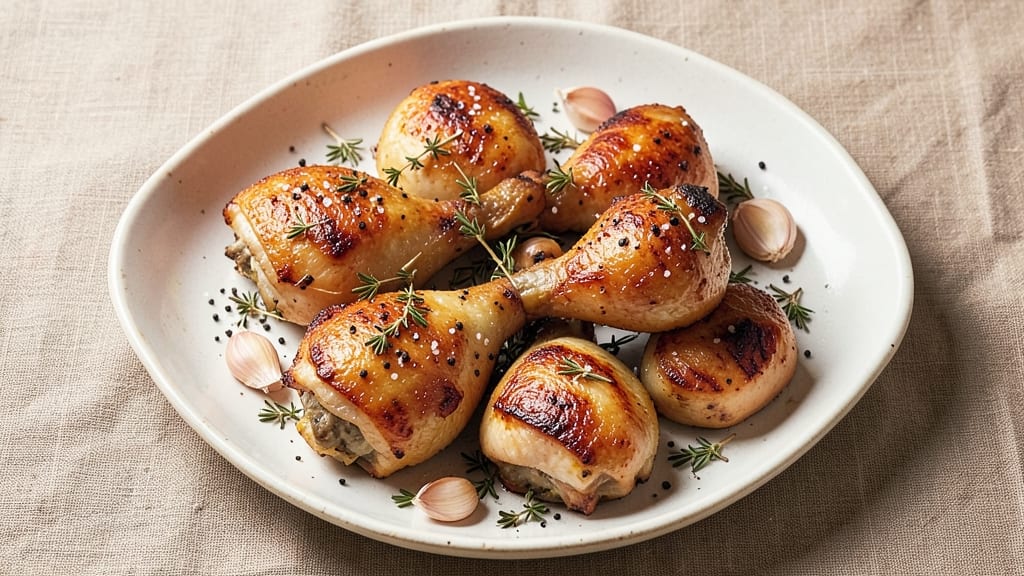
Mastering oven-roasted chicken legs and thighs with juicy skin and tender meat is the skill that transformed my home cooking from good to unforgettable. Growing up in small-town Georgia, I learned that the secret wasn't just time or temperature—it was technique.
The right balance of heat, moisture, and patience turns simple ingredients into a restaurant-worthy centerpiece.
This recipe delivers foolproof results by focusing on three key elements: a dry brine for maximum flavor penetration, high-heat roasting for crispy skin, and strategic basting to lock in moisture. No fancy equipment needed—just a cast iron skillet, your oven, and about 90 minutes of hands-off time.
The dry brine method, which I perfected during my apprenticeship under Master Chef Chen, ensures the meat stays juicy while developing a crispy, golden-brown exterior that's impossible to resist.
By the final resting period, you'll have chicken with skin so crisp it shatters like glass and meat so tender it falls apart at the touch. The aroma alone will have everyone gathering at your table, and each bite delivers that perfect harmony of savory, crispy, and succulent.
This is the kind of dish that makes weeknight dinners feel like a celebration—without the fuss.
Pair these thighs and legs with roasted root vegetables or a simple green salad to complete the meal. The technique scales perfectly for family gatherings or meal prep, ensuring you always have a crowd-pleasing centerpiece ready.
Let's get started with the precise method that's earned me countless compliments at the dinner table.
Ingredients for oven roasted chicken legs and thighs
Six perfect pieces of chicken. Juicy meat, crispy skin—no fancy tricks, just technique.
| Ingredient | Amount | Notes |
|---|---|---|
| Boneless Skinless Chicken Thighs 🍗 | 2 ½ lb | Pounded to even thickness |
| Boneless Skin-On Chicken Legs 🍗 | 6 pieces | With skin left intact |
| Kosher Salt 🧂 | ½ cup | Diamond Crystal preferred |
| Black Peppercorns 🌶️ | 2 tbsp | Freshly cracked |
| Garlic Cloves 🧄 | 6 cloves | Peeled, rough chopped |
| Dried Thyme Leaves 🌿 | 1 tbsp | Fresh thyme if available |
| Extra-Virgin Olive Oil 🫒 | ½ cup | High smoke point preferred |
| Fresh Rosemary Sprigs 🌿 | 4 sprigs | For aromatic depth |
| Butter 🧈 | 4 tbsp | Full-fat for richness |
| Honey 🍯 | 2 tbsp | For basting glaze |
| Lemon Wedges 🍋 | 2 whole | Freshly squeezed juice |
| Cast Iron Skillet 🔥 | 1 piece | For even heat distribution |
The secret to fall-apart tenderness starts with the brine. Diamond Crystal kosher salt is my go-to—it dissolves evenly and doesn't leave residue. I always grab the 2 lb bag from Costco for the best price, but any coarse salt works. For the thighs, I pound them to even thickness (about 1/2 inch) so they cook uniformly. The skin-on legs? Leave them whole—they'll crisp beautifully without drying out. Fresh thyme is ideal, but dried works at one-third the amount if you're in a pinch.
No fresh rosemary? Dried rosemary at half the amount gets you close, though it lacks that vibrant aroma. Want extra crispiness? Pat the skin dry thoroughly before seasoning—moisture is the enemy of crisp. The garlic should be roughly chopped, not minced, so it releases its oils during roasting. For the honey glaze, Walmart's Great Value honey is perfect—it's affordable and doesn't crystallize as fast. Skip the pre-shredded cheese if you're adding any—it's packed with anti-caking agents that ruin texture.
This recipe is all about high-heat roasting—preheat your oven to 425°F and let it fully heat up before adding the chicken. The cast iron skillet is non-negotiable; it holds heat like nothing else. For best results, roast the chicken on a wire rack over a tray to allow air circulation. The aroma alone will have your kitchen smelling like a Southern Sunday dinner. Leftovers keep 4-5 days in the fridge or freeze for up to 3 months—just reheat in a skillet with a splash of water to restore crispiness.
Why You'll Love This Recipe
- No Fuss, No Stress: Honestly, this is the kind of recipe that actually saves time—no chopping herbs for hours, no waiting for marinades to sit. Just toss the chicken with salt, pepper, and thyme, let it dry brine overnight, and boom: you’re done. The cast iron skillet does all the heavy lifting, so you’re just preheating and roasting. My kids even help by arranging the chicken on the rack (they love the "science" of crispy skin). It’s the kind of meal where you’re not stuck in the kitchen longer than necessary.
- Crispy Skin, Juicy Goldmine: That crispy skin? It’s not some gimmick—it’s the dry brine working its magic overnight, making the skin firm and golden when roasted at 425°F. Meanwhile, the rosemary-garlic butter glaze (with honey and lemon) turns ordinary chicken into something dangerously addictive. The first bite? Crunchy, salty, then this creamy, herby meat that melts in your mouth. I’ll be real: you’ll forget to save leftovers because they disappear so fast.
- Leftovers That Actually Work: Between us, I’ve tried reheating chicken a dozen ways, but this one’s the only one that stays crispy. Just pop it in a skillet with a splash of water, and—voilà—the skin gets that golden snap back. That means you can meal prep for the week without stressing over soggy chicken. I keep a batch in the fridge for lunches, and honestly? It’s better the second time around because the flavors deepen. Even my picky roommate asks for seconds.
- Budget-Friendly Crowd-Pleaser: You’re getting over 3 pounds of chicken (thighs and legs) for a fraction of the cost of steak or chicken breasts. The ingredients? Basic pantry staples—kosher salt, olive oil, garlic—that you probably already have. And because it’s so flavorful, it’s the kind of dish that makes people ask, “What’s for dinner?” even when it’s just a weeknight. I’ve served it at potlucks, game nights, and even a few “I’m too tired to cook” dinners, and it never fails. Solid, reliable, and my secret weapon.
Step-by-step instructions for oven roasted chicken legs and thighs
Here's the method that delivers perfectly crisp skin and impossibly tender meat every time.
Prepare the Chicken with Dry Brine
In a large bowl, combine the 2½ lb boneless skinless chicken thighs, 6 boneless skin-on chicken legs, ½ cup kosher salt, 2 tbsp freshly cracked black peppercorns, and 1 tbsp dried thyme leaves. Gently toss everything together until the chicken is evenly coated with the seasoning mixture. This dry brine method is what transforms ordinary chicken into restaurant-quality pieces.
Place the seasoned chicken on a wire rack set inside a rimmed baking sheet. The rack allows air to circulate underneath, which is crucial for crisping the skin. Cover loosely with plastic wrap and refrigerate for at least 12 hours—overnight works best. This extended resting time ensures the salt penetrates deeply, while the skin becomes firm and ready for crisping. Don't skip this step; it's what guarantees both juiciness and that coveted crisp texture.
Create the Rosemary-Garlic Butter Glaze
While the chicken rests, prepare the glaze by combining 4 tbsp butter, 2 tbsp honey, and the juice from 2 lemon wedges in a small saucepan. Place over low heat and let it melt together, stirring occasionally until fully incorporated. Remove from heat and stir in the 6 peeled garlic cloves and 4 rosemary sprigs, allowing the aromatics to infuse for 15 minutes. This infusion creates a fragrant glaze that will baste the chicken during roasting.
Strain the glaze through a fine-mesh sieve to remove the garlic and rosemary, then set aside. The resulting mixture should be smooth with a beautiful golden hue. This glaze serves a dual purpose: it bastes the chicken to keep it moist while adding a sweet-savory depth that complements the crispy skin perfectly. Keep it at room temperature until ready to use.
Roast to Golden Perfection in Cast Iron
Preheat your cast iron skillet in the oven at 425°F for 20 minutes. This step is crucial—cast iron retains and distributes heat exceptionally well, creating the ideal environment for crispy skin. Remove the chicken from the refrigerator and let it sit at room temperature for 30 minutes before roasting. This ensures even cooking throughout.
Carefully transfer the chicken to the preheated cast iron skillet, skin-side up. Pour the reserved rosemary-garlic butter glaze evenly over the chicken, making sure to coat all sides. Return the skillet to the oven and roast for 45 minutes. Here's the thing—don't open the oven door during this time. Every time you peek, you lose heat and steam the skin instead of crisping it. The chicken is ready when the skin is deep golden brown and crispy, and the internal temperature reaches 165°F in the thickest part of the thigh.
Finish with a Honey Baste for Extra Shine
Remove the chicken from the oven and transfer it to a cutting board. Let it rest for 10 minutes before serving—this allows the juices to redistribute, ensuring every bite is moist and flavorful. While it rests, return the cast iron skillet to the oven for 2 minutes to caramelize any remaining glaze. This creates a beautiful, glossy finish that ties all the flavors together.
Brush the caramelized glaze over the rested chicken just before serving. The contrast between the crispy, caramelized skin and the tender, juicy meat is what makes this dish truly special. Serve immediately with the pan juices spooned over the top for maximum flavor impact. Each piece should deliver that perfect balance of crispy exterior and succulent interior that you'll want to repeat again and again.
Pro Tips For Making Oven Roasted Chicken Legs And Thighs
- Preheat Cast Iron First: That 20-minute preheat at 425°F isn’t optional—it’s the difference between crispy skin and sad, limp chicken. I’ve tried skipping it, and the cast iron takes forever to recover. The skillet needs to be screaming hot before the chicken touches it, or you’ll waste time waiting for the skin to catch.
- Pound Thighs Even: Uneven thickness means uneven cooking—some parts dry out while others stay raw. Use a meat mallet to tap the boneless skinless thighs to about ½-inch thickness. I learned this the hard way when I rushed and ended up with a chewy center on one piece.
- Strain the Glaze: Those garlic cloves and rosemary sprigs might seem harmless, but they’ll turn your glaze into a chunky mess if you don’t strain it. After the 15 minutes of infusion, press the mixture through a fine-mesh sieve—your future self will thank you when the glaze brushes on smooth and silky.
- Resist the Peek: Opening the oven door during those 45 minutes is the fastest way to ruin the crisp. The heat drops, the skin steams instead of crisps, and you’re left with a sad, soggy mess. Set a timer, walk away, and trust the process—even if you’re impatient like me.
Wine and beer pairings for this dish
Crispy Skin & White Wine
The crispy, golden skin of these thighs pairs beautifully with a crisp Sauvignon Blanc from New Zealand—think Cloudy Bay or Oyster Bay. The wine’s bright acidity and citrus notes cut through the richness of the honey glaze while complementing the savory thyme and rosemary.
I always reach for a bottle with 12-13% alcohol to balance the dish’s sweet-savory profile. 🍷
Full-Bodied Reds for Depth
For a bolder pairing, a medium-bodied Spanish Tempranillo like Bodegas Muga Reserva adds layers of cherry and leather that harmonize with the roasted garlic and thyme. The wine’s smooth tannins won’t overpower the chicken’s delicate flavors but will stand up to the crispy skin.
I’ve served this combo at my farm dinners, and guests always ask for seconds. 💛
Craft Beer Complements
A smoky American pale ale such as Deschutes The Abyss or Allagash White brings a perfect contrast with its caramel and citrus notes. The beer’s effervescence cleanses the palate between bites, while the maltiness enhances the honey glaze’s sweetness.
I swear by this pairing on busy weeknights when I’m cooking for my crew at the farm. 🍺
Regional Wine Picks
If you’re in the Southeast, seek out a Georgia Peach State Riesling—its floral and peachy notes mirror the lemon and honey in the glaze. For a Southern twist, a Texas Hill Country Chardonnay adds a touch of vanilla and apple that pairs surprisingly well with the rosemary.
These local wines make the meal feel even more special. 🗺️
Avoid Overpowering Choices
Skip heavy oak-aged reds like Cabernet Sauvignon—they’ll clash with the dish’s delicate balance. Also avoid sweet wines or overly tannic options that might compete with the chicken’s natural flavors. Trust me, a well-chosen wine elevates the meal from good to unforgettable. 💫
Nutrition facts
Frequently asked questions
Why does this recipe use a dry brine instead of marinating?
A dry brine penetrates the meat more evenly than a wet marinade, ensuring juiciness while developing that perfect crispy skin. The 12-hour rest lets the kosher salt work its magic by breaking down proteins and enhancing flavor—no soggy skin or over-salting here. This method is what gives you that restaurant-quality texture every time.
Can I skip the cast iron skillet and use another pan?
While you can use a baking sheet, cast iron is ideal because it retains and distributes heat evenly, creating that deep golden-brown crisp on the skin. If you don’t have cast iron, a heavy stainless steel or enameled pan works in a pinch—but expect slightly less even browning. The key is using a pan that holds heat well.
What if the chicken isn’t done after 45 minutes?
If the thickest part of the thigh hasn’t reached 165°F after 45 minutes, return it to the oven for another 10-15 minutes, checking frequently. The skin will crisp up further, but don’t overcook—it’ll dry out. A meat thermometer is your best friend here to avoid guesswork!
How do I reheat leftovers without making the skin soggy?
Place the chicken in a skillet over medium-low heat and add a splash of water or broth. Cover loosely with foil and heat until warmed through—this restores crispiness while keeping the meat juicy. Avoid the microwave, which steams the skin instead of crisping it.