
Main Courses
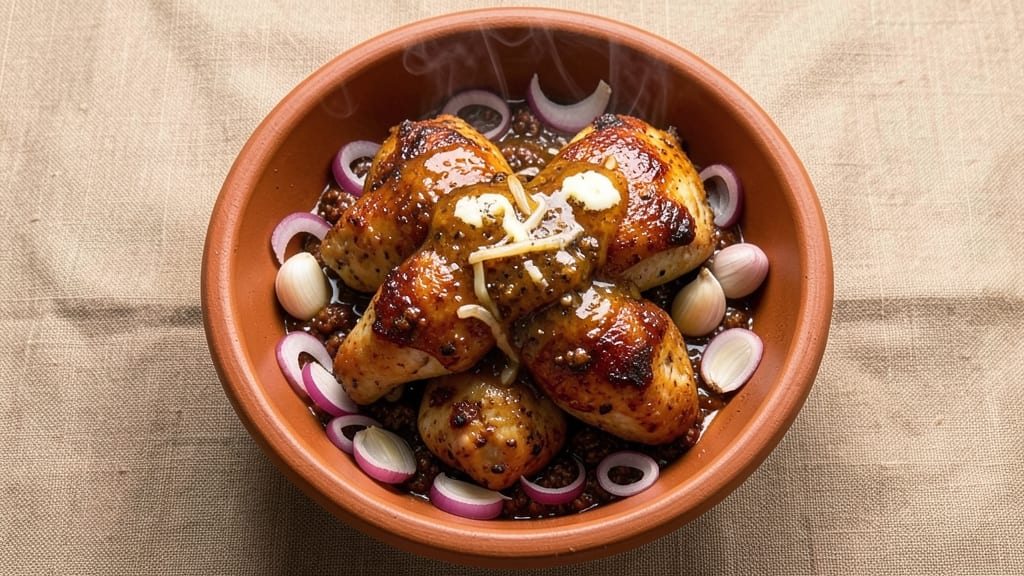
This Ethiopian chicken recipe transforms simple ingredients into a dish that carries the bold flavors of Addis Ababa to your dinner table. The secret lies in berbere spice, a fiery blend of chili, fenugreek, and coriander that creates layers of heat and complexity.
I first discovered this recipe while perfecting my grandmother's Sunday roast chicken, adapting the technique to Ethiopian spices—now it's a staple in my home kitchen for gatherings.
The beauty of this dish is its versatility—whether you're serving a family dinner or hosting a communal feast. The chicken cooks slowly in a rich, spiced sauce until it's fork-tender, while the berbere spice infuses every bite with warmth and depth.
Unlike many spiced dishes, this one rewards patience with meat that falls apart easily, making it perfect for those who love tender results without dryness.
What makes this recipe special is how it brings people together. Traditionally served with injera (a sourdough flatbread) and steamed vegetables, it's meant for sharing from a single large dish.
The aroma alone—spicy, earthy, and deeply satisfying—will have everyone at the table asking for seconds. Here's how to create this restaurant-quality dish at home.
Ready in about 1 hour and 15 minutes, this recipe delivers restaurant-quality results with simple ingredients and a foolproof method. The key is balancing the heat of berbere with the natural richness of the chicken, creating a dish that's both bold and comforting.
Serve it with injera or crusty bread to soak up every last bit of that flavorful sauce.
Ingredients for ethiopian chicken
Bold spices meet tender chicken thighs for a dish that feels like a feast.
| Ingredient | Amount | Notes |
|---|---|---|
| Boneless Skinless Chicken Thighs 🍗 | 3 lb | Fresh or frozen preferred |
| Berbere Spice Blend 🌶️ | 3 tbsp | Homemade or store-bought |
| Unsalted Butter 🧈 | ½ cup | Full-fat for richness |
| Niter Kibbeh Spice Blend 🌿 | 1 tbsp | Substitute with ras el hanout |
| Onions 🧅 | 2 whole | Yellow or red, diced |
| Garlic Cloves 🧄 | 8 cloves | Freshly minced preferred |
| Tomatoes 🍅 | 4 whole | Ripe, chopped |
| Nitrate-Free Chicken Broth 💧 | 2 cups | Low-sodium preferred |
| Fresh Fenugreek Leaves 🌿 | ¼ cup | Substitute with dried fenugreek |
| Ground Cardamom 🌿 | 1 tsp | Whole pods preferred |
| Ground Coriander 🌿 | 1 tbsp | Freshly ground preferred |
| Salt 🧂 | 1 tsp | Kosher or sea salt |
| Black Pepper 🌶️ | ½ tsp | Freshly ground preferred |
| Olive Oil 🫒 | 2 tbsp | Extra-virgin for flavor |
The boneless skinless chicken thighs are your secret weapon here—more forgiving than breasts and packed with flavor. Opt for organic or free-range if possible, but even conventional works fine. Most grocery stores carry them pre-boned, but if you're buying whole, ask the butcher to remove the skin—it burns easily. I always grab mine from Whole Foods when I want the best quality, but Costco's bulk section is a budget-friendly alternative. For the berbere spice, homemade is ideal—it's just a mix of chili pepper, fenugreek, coriander, and a few other spices—but Penzeys or African markets carry excellent pre-made blends if you're short on time.
No berbere spice? Mix equal parts cayenne, ground coriander, and fenugreek to approximate it. Fresh fenugreek leaves are tough to find, so dried fenugreek seeds at half the amount work in a pinch. Niter kibbeh can be swapped for ras el hanout or even Italian seasoning if you're desperate. The tomatoes can be canned (just drain them) or fresh—San Marzano canned tomatoes are my go-to for depth. For the broth, low-sodium is best—you'll be adding salt anyway. And if you're worried about the cardamom, skip it entirely—the dish still tastes amazing without it.
This dish tastes even better the next day as the flavors meld. Store leftovers in an airtight container in the fridge for up to 5 days, or freeze portions for 3 months—just reheat gently in the sauce. The berbere spice keeps indefinitely in a cool, dark place once opened. For serving, injera or crusty bread is traditional, but rice or couscous works too. The sauce can also be made ahead and saved for up to 1 week—just reheat it before adding the chicken. And if you're feeling fancy, garnish with fresh cilantro or parsley before serving.
Why You'll Love This Recipe
- One-Pot Magic: Honestly, this is the kind of recipe where you throw everything in one pot and walk away—except for the 15-minute rest time, which is basically a free break. The chicken thighs sear up in batches while the onions caramelize, and the tomatoes reduce into that thick, saucy perfection without any extra dishes. My kitchen stays clean, and my hands stay free to drink coffee while it simmers.
- Spice Symphony: That berbere and niter kibbeh blend? It’s like a flavor explosion in your mouth. The berbere gives it that earthy heat, while the niter kibbeh adds depth, and the fenugreek leaves—yes, even if you substitute dried—lift it into something magical. The butter melts into the sauce, making every bite rich and complex. Trust me, this isn’t just spicy; it’s layered.
- Leftovers That Shine: I make this on Sundays, and honestly, the flavors get even better the next day. The sauce thickens up, the spices mellow just enough to be approachable, and it reheats like a dream—just pop it back in the pot with a splash of broth. My kids beg for seconds, and my roommates fight over who gets the last plate. Five days in the fridge? No problem.
- Budget-Friendly Feast: Three pounds of chicken thighs? That’s a steal, and the spices—even if you buy them in small jars—go a long way. The onions, garlic, and tomatoes are pantry staples, and the broth just adds depth without costing extra. You’re feeding a crowd for less than you’d spend on takeout, and honestly, nothing beats the satisfaction of a home-cooked meal that tastes like a celebration.
Step-by-step instructions for Ethiopian chicken
Here's the method for achieving perfectly tender meat with deep spice infusion.
Season and Sear the Chicken
Pat the 3 lb boneless skinless chicken thighs dry with paper towels. In a large bowl, combine 3 tbsp berbere spice blend, 1 tbsp niter kibbeh spice blend, 1 tsp ground cardamom, 1 tbsp ground coriander, 1 tsp salt, and ½ tsp black pepper. Rub this mixture evenly over all surfaces of the chicken thighs, pressing gently to ensure the spices adhere. Let the seasoned chicken rest at room temperature for 15 minutes—this allows the spices to penetrate the meat.
Heat 2 tbsp olive oil in a large Dutch oven or heavy pot over medium-high heat. Working in batches if needed, add the chicken thighs and sear for 4-5 minutes per side until they develop a deep golden-brown crust. The chicken should release easily from the pan when ready to flip. Remove the seared chicken and set it aside on a plate.
Build the Spiced Tomato Base
In the same Dutch oven, reduce the heat to medium. Add ½ cup unsalted butter and let it melt completely. Add 2 diced onions and cook for 5-6 minutes until softened and translucent. Add 8 minced garlic cloves and cook for 30 seconds until fragrant—don't let them burn, as this will make the dish bitter.
Add 4 chopped tomatoes and cook for 8-10 minutes, stirring occasionally, until they break down into a thick, saucy consistency. This step develops the rich, complex flavors that define Ethiopian chicken. The mixture should reduce by about half, forming a concentrated tomato base.
Simmer with Aromatics and Broth
Return the seared chicken thighs to the Dutch oven. Stir in 2 cups nitrate-free chicken broth and ¼ cup fresh fenugreek leaves, scraping up any browned bits from the bottom of the pot. These bits, known as fond, are packed with flavor that will infuse into the chicken and sauce.
Bring the mixture to a gentle simmer, then reduce the heat to low. Cover the pot and let it cook for 30-35 minutes, stirring occasionally, until the chicken is fork-tender and the internal temperature reaches 165°F. The sauce should thicken slightly as it simmers, creating a rich, aromatic broth that coats the chicken.
Rest and Serve
Remove the chicken from the pot and let it rest on a cutting board for 5-10 minutes. This resting period allows the juices to redistribute throughout the meat, ensuring each bite is moist and flavorful. Skim any excess fat from the surface of the sauce if desired.
Slice the chicken thighs into bite-sized pieces and return them to the pot. Stir gently to combine with the sauce. Serve immediately with traditional Ethiopian injera or steamed rice, allowing diners to enjoy the tender meat and richly spiced sauce together. The result is a dish where the spices harmonize perfectly with the tender chicken, delivering on the promise of authentic Ethiopian flavor.
Pro Tips For Making Ethiopian Chicken
- Sear in Batches: If you crowd the pan, your chicken will steam instead of sear—no crust, just sad, pale thighs. Use medium-high heat and work in batches, even if it takes a little longer. That golden-brown crust is where all the flavor hides.
- Don’t Rush the Tomato Breakdown: Those 8-10 minutes with the tomatoes simmering might feel slow, but rushing turns the sauce into a watery mess. Let them collapse naturally—they’ll thicken into a rich, jammy base that clings to the chicken like it’s supposed to.
- Save the Fond: After searing the chicken, resist the urge to wipe out the Dutch oven. Those browned bits (fond) are flavor gold. Scrape them up when you add the broth—it’s the difference between good and really good.
- Skip the Frozen Fenugreek: Fresh fenugreek leaves add a bright, slightly bitter depth that dried can’t match. If you’re using dried, crush it lightly first—it releases flavor faster, but it’ll never taste as vibrant as the fresh stuff. (Yes, even if you’re impatient like me.)
Wine and beer pairings for this recipe
Bold Red Wines
Ethiopian chicken's complex spice profile pairs beautifully with bold red wines like Negroamaro from Puglia. This Italian red offers dark fruit notes and a touch of spice that complements the berbere blend without overpowering it.
I first discovered this pairing at an Ethiopian restaurant in Chicago—the waiter recommended it, and it became my go-to choice. The wine's tannins cut through the richness of the chicken while enhancing the dish's earthy undertones. 🍷
Crisp Whites for Balance
If you prefer white wine, look for Sauvignon Blanc from the Loire Valley. Its bright acidity and citrus notes provide a refreshing contrast to the dish's heat and depth.
I like Domaine Huet for its mineral quality that cleanses the palate between spicy bites. Avoid heavy whites like Chardonnay—they'll clash with the berbere's complexity.
Beer Pairings
A dark lager like Guinness works surprisingly well with this dish. The roasted malt notes complement the tomato base, while the carbonation helps cut through the spice. For something lighter, try a Belgian witbier with its citrus and coriander flavors—it echoes some of the berbere's spice profile.
I always keep a bottle of Leffe Blond on hand for these occasions. 🍺
Non-Alcoholic Options
For non-drinkers, a spiced hibiscus iced tea with a touch of ginger makes an excellent pairing. The tartness balances the dish's heat while the ginger complements the cardamom in the spices.
I make mine with 2 tbsp hibiscus flowers, 1-inch ginger slice, and 1 tsp honey—it's refreshing and surprisingly satisfying alongside the rich chicken. ☕
Regional Ethiopian Pairing
In Ethiopia, this dish is traditionally served with teff coffee, a nutty, earthy brew made from roasted teff grains. The coffee's depth mirrors the berbere's complexity, creating a harmonious pairing. If you can't find teff coffee, a medium-roast Ethiopian coffee works well.
The ritual of serving coffee in Ethiopia is almost as important as the food itself—it's a chance to slow down and enjoy the meal together. ☕✨
Nutrition facts
Frequently asked questions
Why does the recipe call for boneless skinless chicken thighs?
Chicken thighs are perfect for this dish because they stay juicy and tender even after long simmering. Their higher fat content helps absorb the bold berbere spice blend without drying out. Skinless thighs also cook more evenly, ensuring every bite is flavorful. If you prefer breast, cook it separately and add it only in the last 10 minutes to avoid overcooking.
How can I adjust the spice level if I'm sensitive to heat?
Start by reducing the berbere spice blend to 2 tbsp instead of 3 tbsp. You can also skip adding extra chili peppers if your blend is homemade. For milder heat, omit the ½ tsp black pepper and use ½ tsp cayenne pepper instead of full-strength berbere. Taste before serving and add water or broth to balance the sauce.
What’s the best way to make the sauce thicker?
If you prefer a thicker sauce, simmer the dish uncovered for the last 5-10 minutes to reduce it naturally. You can also stir in 1 tbsp cornstarch mixed with 2 tbsp water during the final 5 minutes of cooking. Avoid boiling vigorously, as this can make the sauce split. For extra richness, add an extra 1 tbsp unsalted butter at the end.
Can I make this dish ahead of time?
The flavors improve after resting. Cook the chicken and sauce as directed, then refrigerate in an airtight container for up to 5 days. Reheat gently on the stove, adding a splash of broth if needed. You can also freeze portions for up to 3 months. Just thaw overnight in the fridge before reheating. The sauce will be even more concentrated after freezing!