
Side Dishes
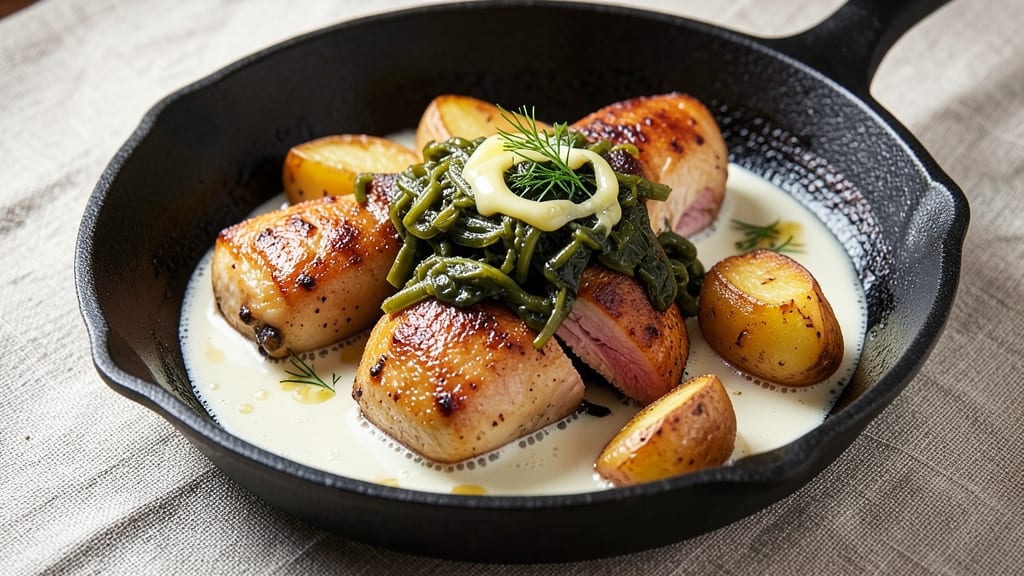
This chicken sauerkraut potatoes recipe delivers hearty German-inspired comfort in a single pan, where tender chicken meets tangy sauerkraut and crispy potatoes. I perfected it after years of testing one-pot techniques that balance rich flavors without fuss—ideal for weeknights when you crave a restaurant-worthy meal without the prep.
The secret lies in layering textures: crispy potato edges, juicy chicken, and sauerkraut that softens just enough to soak up all the savory juices.
What makes this dish special is its simplicity—just a few pantry staples and 30 minutes of active time yield a meal that feels like a home-cooked feast. The chicken develops a golden crust while the potatoes roast until caramelized, and the sauerkraut transforms from tart to mellow through gentle cooking.
This recipe works equally well for a family dinner or a cozy solo meal, with flavors that deepen as they sit.
By the time you serve it, your table will smell like a German countryside tavern, with crispy potatoes that hold their shape, chicken that stays juicy, and sauerkraut that’s perfectly tender with just a hint of tang.
The one-pan method means minimal cleanup, and the dish reheats beautifully for leftovers—making it a foolproof solution for busy weeks.
Serve with a dollop of sour cream or a sprinkle of fresh dill for extra brightness. The combination of textures and flavors makes this more than just a side—it’s a complete, satisfying dish that proves hearty meals don’t require complicated techniques. Let’s get cooking!
Ingredients for chicken sauerkraut potato
Pantry staples and a handful of German-inspired ingredients for a one-pan wonder that tastes like a tavern feast.
| Ingredient | Amount | Notes |
|---|---|---|
| Boneless, Skinless Chicken Thighs 🍗 | 1 ½ lb | Cut into 1-inch pieces |
| Russet Potatoes 🥔 | 2 lb | Cut into 1-inch cubes, peeled |
| Sauerkraut (Unpasteurized) 🥬 | 14 oz | Drained and rinsed |
| Unsalted Butter 🧈 | 4 tbsp | Full-fat for best flavor |
| Heavy Cream 🥛 | ½ cup | Full-fat preferred |
| Dry White Wine 🍷 | ½ cup | Any crisp variety |
| Chicken Broth 💧 | 1 cup | Low-sodium preferred |
| Fresh Thyme Leaves 🌿 | ¼ cup | Chopped, or 1 tbsp dried |
| Fresh Rosemary 🌿 | 1 tbsp | Chopped, or 1 tsp dried |
| Garlic Cloves 🧄 | 4 cloves | Minced, or 1 tsp garlic powder |
| Diamond Crystal Kosher Salt 🧂 | 1 ½ tsp | Adjust to taste |
| Freshly Ground Black Pepper 🌶️ | ½ tsp | Freshly cracked |
| Bay Leaves 🌿 | 2 whole | Removed before serving |
| Sour Cream 🥛 | ¼ cup | For serving, optional |
| Fresh Dill 🌿 | ⅛ cup | Chopped, for garnish |
The chicken thighs are key here—thighs over breasts stay juicier during the long cooking time. Look for bone-in, skin-on if you can find them; the skin crisps beautifully. For sauerkraut, unpasteurized is a must—it has that tangy kick that pasteurized lacks. I grab mine from the refrigerated section at Whole Foods or the German market if there's one nearby. The potatoes? Russets or Yukon Golds both work—just make sure they're cut evenly for consistent cooking. Fresh herbs make all the difference, so if you're using dried, measure carefully—they're more concentrated than fresh.
No white wine? Substitute extra chicken broth, but add a splash of vinegar or lemon juice for brightness. Short on fresh thyme or rosemary? Dried works at one-third the amount, but toast it in a dry pan for 30 seconds first to wake up the flavor. The butter is non-negotiable—full-fat only—it adds richness that lighter versions can't match. For the potatoes, if you can't find Russets, Yukon Golds or red potatoes work in a pinch, but they'll break down faster. And if you're feeling lazy, pre-cut frozen hash browns (thawed and drained) can stand in, though they won't be as crispy.
This dish tastes even better the next day—leftovers keep for 4-5 days in the fridge, and it freezes beautifully for up to 3 months. For reheating, cover with foil and warm in a 350°F oven for 15-20 minutes—the potatoes stay crispy that way. I like to portion it into individual containers with a little extra broth on top so it doesn't dry out. Serve with a dollop of sour cream and a sprinkle of fresh dill for that final touch—trust me, it makes all the difference.
Why You'll Love This Recipe
- One-Pot Magic: I love that this dish lives in a single Dutch oven—no extra pans, no frantic cleanup. Just toss the chicken, potatoes, and sauerkraut in there, and let it all simmer together while you relax. The butter and wine deglaze step? That’s where the flavor magic happens, but honestly, it’s all hands-off after that.
- Sauerkraut Surprise: The tangy, probiotic kick from the unpasteurized sauerkraut cuts through the richness of the butter and cream, making every bite balanced and exciting. My kids think they’re eating "sour potatoes," but they’ll fight you for seconds—trust me, the creamy finish makes it irresistible.
- Leftovers Are Legendary: This dish gets even better the next day, and honestly, it’s the perfect freezer meal. I’ll pack half for lunch, freeze the rest, and pull it out on a night when I’m too tired to cook. The flavors just deepen, and the texture? Pure comfort.
- Budget-Friendly Feast: You’re getting tender chicken, creamy potatoes, and probiotic sauerkraut all for less than $15. The full-fat butter and heavy cream might seem pricey, but they make this dish feel like a restaurant meal—without the bill. Plus, the wine? Use whatever’s open in your cabinet.
Step-by-step instructions for chicken sauerkraut potatoes
This one-pan wonder combines hearty flavors with minimal cleanup—just follow these precise steps.
Sear the Chicken and Sauté Aromatics
Heat a large Dutch oven over medium-high heat. Add 2 tbsp of the unsalted butter and let it melt completely, swirling to coat the bottom. Add the 1.5 lb boneless, skinless chicken thighs cut into 1-inch pieces, working in batches if needed to avoid crowding. Sear for 5-6 minutes until the chicken is golden brown on all sides and develops a crust. Remove the chicken and set it aside temporarily.
In the same Dutch oven, add the remaining 2 tbsp unsalted butter. Toss in the 4 cloves garlic cloves (minced) and 1 tbsp fresh rosemary (chopped), cooking for 30 seconds until fragrant. Add the 2 lb russet potatoes (cut into 1-inch cubes) and toss to coat them in the buttery garlic mixture. Sprinkle with 1½ tsp diamond crystal kosher salt and ½ tsp freshly ground black pepper. Cook for 5 minutes, stirring occasionally, until the potatoes begin to soften slightly.
Deglaze and Simmer the Sauerkraut
Pour in the 0.5 cup dry white wine, scraping up any browned bits from the bottom of the pot. Let it simmer for 2 minutes until the wine reduces slightly and the aroma intensifies. Add the 14 oz sauerkraut (drained and rinsed) and 1 cup chicken broth, along with the 0.25 cup fresh thyme leaves (chopped) and 2 whole bay leaves. Stir well to combine, then return the seared chicken to the pot.
Bring the mixture to a gentle simmer, then reduce the heat to low. Cover the Dutch oven and let it cook for 25-30 minutes, stirring occasionally, until the potatoes are tender when pierced with a fork. The chicken should also be cooked through, with an internal temperature of 165°F. If the liquid reduces too much before the potatoes are done, add 2-3 tbsp water to maintain moisture.
Finish with Cream and Fresh Herbs
Once the potatoes are tender, remove the 2 whole bay leaves and discard them. Stir in the 0.5 cup heavy cream and 0.5 cup dry white wine, letting the mixture simmer for 5-7 minutes until the sauce thickens slightly and coats the back of a spoon. Taste and adjust the seasoning with additional diamond crystal kosher salt or ½ tsp freshly ground black pepper if needed.
Gently fold in the ¼ cup chopped fresh dill and let it steep for 2 minutes to infuse the dish with bright, fresh flavor. Remove the pot from heat and let it rest for 5 minutes to allow the flavors to meld together. Serve immediately, garnished with a dollop of 0.25 cup sour cream and an extra sprinkle of ¼ cup chopped fresh dill for a touch of elegance.
Pro Tips For Making Chicken Sauerkraut Potato
- Sear in Batches: I learned this the hard way—crowding the pan turns your golden chicken into sad, steamed chunks. Work in batches with those 1-inch pieces, even if it takes two rounds. That crust? Non-negotiable for flavor.
- Rinse Sauerkraut Right: Drain the sauerkraut, then give it a quick cold water rinse (yes, even unpasteurized). It cuts the sharpness without losing texture, and trust me, you don’t want that vinegar punch fighting the cream later.
- Check Potato Doneness: After 25 minutes, poke a potato with a fork—if it slides in like butter, it’s done. If not, cover with a splash of water and let it steam for 5 more minutes. Dry, fluffy potatoes make all the difference.
- Simmer Cream Low: That heavy cream will curdle if you rush it. After adding it, drop the heat to the lowest setting and let it bubble gently for those 5-7 minutes. Patience here keeps the sauce silky, not lumpy.
Wine and beer pairings for these flavors
Crisp White Wine Pairings
This dish calls for a crisp, dry white wine that complements the tangy sauerkraut and rich chicken without overpowering the flavors. I reach for a German Riesling Kabinett—its bright acidity and subtle apple notes cut through the creaminess while balancing the sauerkraut’s sharpness.
A 2022 Dr. Loosen Blue Slate is my go-to; it’s refreshing and just sweet enough to contrast the dish’s savory depth. 🍷
German Lager for Beer Lovers
If you prefer beer, a German Pilsner like Warsteiner Premium is perfect—its clean, slightly bitter profile cleanses the palate between bites. The malt sweetness pairs beautifully with the buttery potatoes and sauerkraut’s tang.
For a craft twist, try a Belgian Witbier with coriander and citrus notes to add complexity. Both keep the dish feeling light and refreshing.
Off-Dry Riesling Boost
Looking for something with a touch of sweetness? An off-dry Riesling like Dr. Loosen "Blue Slate" Spätlese enhances the dish’s natural sweetness from the cream and potatoes. The wine’s stone fruit flavors harmonize with the sauerkraut’s funk, making every bite balanced and satisfying.
I always keep a bottle chilled in the fridge for this exact dish.
Dry Cider Alternative
No wine? A dry apple cider like Martin’s Finest Dry Hard Cider works surprisingly well. Its crisp acidity mirrors the wine’s role, while the subtle apple notes echo the sauerkraut’s tang.
Serve it ice-cold to keep the flavors vibrant and refreshing alongside the hearty dish. It’s a great option for those who prefer beer or want a non-alcoholic pairing.
Spiced Wine for Depth
For a bolder pairing, a German Spätburgunder (Pinot Noir) like Dr. Loosen "Blue Slate" Spätburgunder adds depth with its red fruit and earthy notes. The wine’s soft tannins won’t overpower the dish but instead complement the creamy sauce and sauerkraut’s funk.
This is my secret weapon for impressing guests who expect a red wine pairing. 💛
Nutrition facts
Frequently asked questions
Why does this recipe use chicken thighs instead of breasts?
Chicken thighs stay juicier during the long cooking time—25-30 minutes—that this dish requires. Their higher fat content keeps them tender, while breasts can dry out. The thighs also develop a delicious golden crust when seared, adding extra flavor. For even better results, opt for bone-in, skin-on thighs if available!
What’s the best way to substitute dried herbs for fresh?
Use one-third the amount of dried herbs compared to fresh, but first toast them in a dry pan for 30 seconds to wake up their flavor. For example, replace 0.25 cup fresh thyme with 1 tbsp dried thyme after toasting. This simple step makes a big difference in depth of flavor!
Can I make this dish ahead of time?
This dish tastes even better the next day. Leftovers keep perfectly for 4-5 days in the fridge. To reheat, cover with foil and warm in a 350°F oven for 15-20 minutes—the potatoes stay crispy that way. It also freezes beautifully for up to 3 months if you want to meal prep!
What if I don’t have white wine?
No problem! Substitute extra chicken broth and add a splash of lemon juice or vinegar for brightness. The dish will still be flavorful—just keep an eye on seasoning. For a non-alcoholic option, dry apple cider works surprisingly well too!