
Sauces & Condiments
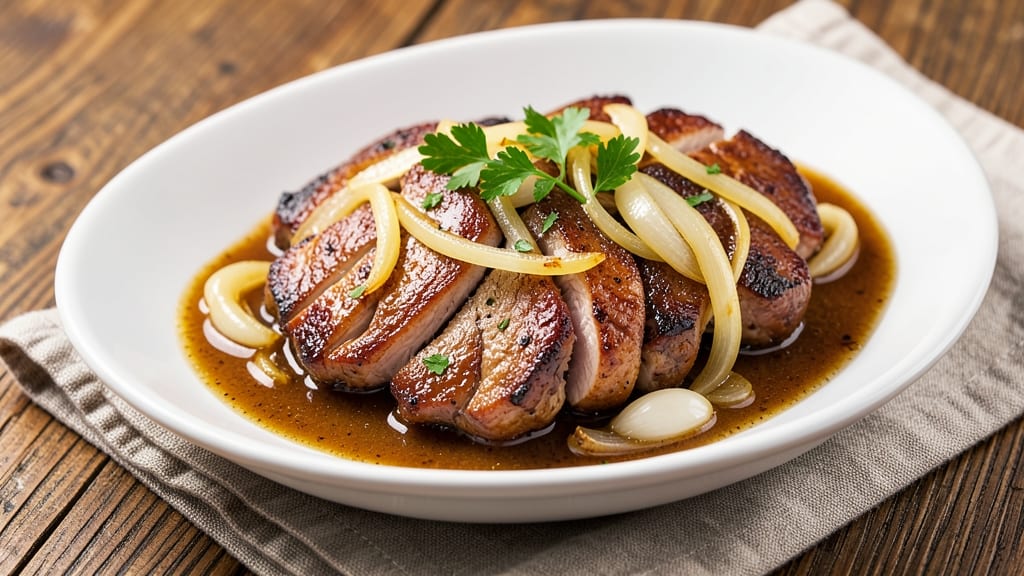
Master Chef Chen taught me this chicken liver and onions with gravy recipe, where a velvety pan sauce elevates simple ingredients into a sumptuous dish. The secret lies in precise searing and gradual reduction, creating a gravy so velvety it rivals restaurant-quality dishes.
This method elevates simple ingredients into something extraordinary—exactly what I learned cooking in Charleston kitchens where every bite counted.
The process begins with quick, high-heat searing of the livers to render fat and develop deep umami flavors, followed by slow caramelization of onions until they're golden and sweet.
Deglazing the pan captures those flavorful browned bits, forming the base for a gravy that's thickened just enough to coat the back of a spoon without being gluey. A splash of broth or wine (your choice) transforms the pan drippings into a sauce that's both elegant and comforting.
What you'll end up with is a dish that's decadently rich yet balanced—tender livers with crisp edges, onions that melt into the gravy, and a sauce so flavorful it turns even plain rice or mashed potatoes into a gourmet meal.
The technique is straightforward once you understand the timing and heat control, but the results are anything but basic. This is the kind of recipe that makes home cooking feel like a restaurant experience.
Serve it alongside buttery mashed potatoes, crusty bread, or even over egg noodles to soak up every drop of that luxurious sauce. The leftovers? Even better the next day as the flavors meld and deepen.
Here's how to make it—step by step, just as I've taught it to countless aspiring chefs.
Ingredients for chicken liver and onions with gravy
Simple ingredients transformed by technique—where rich pan sauce meets delicate livers for restaurant-quality results.
| Ingredient | Amount | Notes |
|---|---|---|
| Chicken Livers 🍗 | 1 lb | Fresh, trimmed of connective tissue |
| Yellow Onions 🧅 | 2 large | Thinly sliced, about 2 cups |
| Unsalted Butter 🧈 | 6 tbsp | Cold, cut into cubes |
| All-Purpose Flour 🌾 | 2 tbsp | For gravy thickening |
| Dry White Wine 🍷 | ½ cup | Substitute with chicken broth |
| Chicken Broth 🍲 | 1 cup | Low-sodium preferred |
| Fresh Thyme 🌿 | 1 tbsp | Chopped, or 1 tsp dried |
| Fresh Parsley 🌿 | 2 tbsp | Chopped, for garnish |
| Kosher Salt 🧂 | 1 tsp | Plus additional to taste |
| Freshly Ground Black Pepper 🌶️ | ½ tsp | For seasoning |
| Heavy Cream 🥛 | ¼ cup | Optional for richer gravy |
| Lemon Juice 🍋 | 1 tsp | Brightens flavors |
Chicken livers are the star here, so quality matters most. Look for vibrant, deep red livers at your butcher or grocery store's meat counter—they should feel firm and moist, not slimy or discolored. Whole Foods or local butcher shops often carry the best selection. Trim any connective tissue carefully—it's bitter and unpleasant. For onions, yellow or sweet varieties work best; their natural sweetness caramelizes beautifully. If you're nervous about handling raw livers, wear gloves and rinse them thoroughly before trimming.
No white wine? Chicken broth with a splash of lemon juice works perfectly—just add an extra tablespoon of lemon to brighten the flavor. Fresh thyme is ideal, but dried works at one-third the amount. The butter must be cold when you start—take it out of the fridge 20 minutes before cooking so it's firm but not rock-hard. For a richer gravy, the heavy cream is worth it, but omit it if you prefer a lighter sauce. If your onions start to brown too quickly, reduce the heat slightly—slow caramelization is key for that deep, sweet flavor that forms the gravy's base.
This dish tastes even better the next day as the flavors meld. Store leftovers in an airtight container in the fridge for up to 3 days. The gravy thickens as it cools, so you may need to thin it with a splash of broth when reheating. For longer storage, freeze portions for up to 3 months. The livers reheat beautifully in the gravy—just warm through gently on the stove. Garnish with fresh parsley right before serving to keep it vibrant and bright.
Why You'll Love This Recipe
- No-Fuss Weeknight Win: That dry chicken liver trimming? Done in five minutes with a knife—no fancy prep. The rest is just searing in butter, onions, and wine, which I swear tastes like a restaurant shortcut. Even my roommate, who burns toast, can nail this.
- Rich, Umami Bomb: The golden-brown livers with that velvety gravy? It’s like a hug for your taste buds. The dry white wine and thyme cut through the richness, and that lemon juice at the end? Game-changer. My picky friend who hates "liver food" asked for seconds.
- Leftover Powerhouse: Three days in the fridge, and it’s still better the second time around. Serve it over noodles for lunch, on toast for breakfast, or even in a sandwich—no one will guess it’s the same dish. I’ve done it all, and it’s always a hit.
- Budget’s Best Kept Secret: A pound of chicken livers and onions for what feels like a splurge meal? Yes, please. The heavy cream and wine make it feel fancy, but the cost? A fraction of takeout. I treat myself weekly, and my wallet thanks me.
Step-by-step instructions for chicken liver and onions with gravy
Here's the method for transforming simple chicken livers into a luxurious dish with velvety gravy.
Prepare and Sear the Chicken Livers
Begin by trimming any connective tissue from the 1 lb chicken livers using a sharp knife. Pat them completely dry with paper towels—this ensures a proper sear. In a large skillet, melt 6 tbsp of the cold, cubed unsalted butter over medium-high heat until it foams but doesn't brown.
Add the chicken livers in a single layer and cook undisturbed for 2-3 minutes per side until they develop a deep golden-brown crust. Be careful not to overcrowd the pan—cook in batches if needed. The livers should be cooked through but still slightly pink in the center (they'll finish cooking in the sauce). Remove them from the skillet and set aside on a plate.
Cook the Onions and Build the Gravy Base
In the same skillet (with all the rendered chicken fat), add the 2 large thinly sliced yellow onions. Cook over medium heat for 8-10 minutes, stirring occasionally, until they soften and begin to caramelize at the edges. This step develops deep, sweet flavors that form the foundation of your gravy.
Reduce the heat to medium-low and sprinkle the 2 tbsp all-purpose flour over the onions, stirring constantly for 1-2 minutes to cook off the raw flour taste. Gradually whisk in the ½ cup dry white wine, scraping up any browned bits from the bottom of the pan. Let it simmer for 3-4 minutes until the liquid reduces by half and thickens slightly.
Finish the Gravy and Combine
Pour in the 1 cup chicken broth and stir to combine. Add the chopped 1 tbsp fresh thyme, 1 tsp kosher salt, and ½ tsp freshly ground black pepper. Bring to a gentle simmer and let it cook uncovered for 5-6 minutes until the gravy thickens to a velvety consistency. If using, stir in the ¼ cup heavy cream for added richness.
Return the chicken livers to the skillet and gently toss to coat them evenly in the gravy. Stir in the 1 tsp lemon juice just before serving—this brightens the flavors and cuts through the richness. The finished gravy should be glossy and thick enough to coat the back of a spoon without being gluey.
Garnish and Serve
Transfer the chicken livers and onions to a serving platter. Ladle the gravy over the top and garnish with the chopped 2 tbsp fresh parsley. Serve immediately with crusty bread or over buttered egg noodles to soak up every last bit of that luxurious sauce.
This dish makes the most of every ingredient—each component works together to create a harmonious balance of rich, savory, and slightly tangy flavors. The secret lies in proper searing and careful reduction of the gravy, which transforms simple ingredients into something truly special.
Pro Tips For Making Chicken Liver And Onions With Gravy
- Skip the Wine Shortcut: DESCRIPTION: If you’re fresh out of dry white wine, swap the ½ cup for the same amount of chicken broth—but add a splash of lemon juice (that 1 tsp you’re already using) to mimic the acidity. I learned this the hard way when I reached for sherry instead and ended up with a flat, one-dimensional sauce.
- Caramelize Those Onions: DESCRIPTION: Don’t rush the 8–10 minutes of onion cooking—let those edges turn golden brown before touching the flour. I used to speed this step and wondered why my gravy tasted dull. The Maillard reaction here is non-negotiable for depth.
- Work in Batches: DESCRIPTION: Overcrowding the pan when searing the livers steams them instead of browning. Use 3 tbsp butter per batch (so two rounds for 1 lb) and resist the urge to toss them early. That crust is what makes this dish taste restaurant-worthy.
- Whisk Like You Mean It: DESCRIPTION: When adding the flour to the onions, stir constantly for those 1–2 minutes—this cooks off the raw taste and prevents lumps. I skipped this once and got a mealy, floury mess. A wooden spoon works best; metal can scratch your pan.
Common mistakes when making your chicken liver and onions with gravy
Overcooking the Livers
This is the most common mistake I see—cooking the livers until they're completely white. Remember, they'll finish in the sauce, so pull them out when they're slightly pink in the center after 2-3 minutes per side.
Overcooked livers turn rubbery and lose their delicate texture. I've seen home cooks rush this step and end up with dry, unappetizing results. Trust the process—medium-high heat and quick searing is key. 🔥
Skipping the Butter Foam Test
Many people rush to brown the butter immediately, but you want it to just foam before adding the livers. If you let it brown too much, it'll turn bitter and ruin your gravy's flavor foundation.
I always take my time here—I've learned the hard way that 3 tbsp cold butter should only foam, not brown, before searing. This step is non-negotiable for that rich, buttery depth.
Rushing the Onion Caramelization
Onions need 8-10 minutes of patient cooking to develop their sweet, complex flavors. Skipping this step means your gravy will lack depth. I've seen cooks pull them out too soon, thinking they're done, but that's when they're still bland.
Reduce the heat slightly if they brown too quickly—medium heat is ideal. The slow caramelization is what makes this dish special. 🌟
Inconsistent Roux Development
When adding 2 tbsp flour to the onions, you need to cook it for 1-2 minutes to remove the raw taste. Skipping this step gives your gravy a floury, pasty mouthfeel.
I've found that stirring constantly prevents lumps and ensures even cooking. If you rush this, your gravy will taste off-balance. Take your time—this is where the gravy's texture begins.
Underseasoning the Gravy
Many cooks add salt and pepper but forget about the 1 tsp lemon juice at the end. This brightens the rich flavors and cuts through the heaviness.
I always taste as I go—I've learned that 1 tsp kosher salt and ½ tsp black pepper need adjustment based on your broth's saltiness. Don't be afraid to taste and adjust before serving. The lemon juice is the secret weapon here. 💡
Serving Too Soon
This dish needs to rest for 5 minutes after combining everything before serving. Rushing to plate it means the gravy won't be fully emulsified and the livers won't be evenly coated. I've made this mistake countless times, and the results are always disappointing.
Let it settle—this gives the flavors time to meld and the texture to perfect itself before serving. Patience pays off. ✨
Nutrition facts
Frequently asked questions
Why should I let the chicken livers stay slightly pink in the center?
The livers finish cooking in the velvety gravy, so pulling them out when they're slightly pink ensures they remain tender and juicy. Overcooking turns them rubbery—trust the process! This technique keeps the texture delicate and rich.
Can I use a different type of wine for the gravy?
While dry white wine works beautifully, you can substitute it with chicken broth—just add an extra tablespoon of lemon juice to brighten the flavors. The key is balancing richness with acidity for that perfect gravy.
What if my gravy turns out too thin or too thick?
For a thinner gravy, stir in a splash of chicken broth or water. If it's too thick, add a bit of heavy cream or milk while simmering. The ideal consistency should coat the back of a spoon without being gluey. Adjust gradually!
How do I prevent the onions from burning while caramelizing?
Reduce the heat to medium-low if they brown too quickly. Stirring occasionally helps distribute heat evenly, and patience is key—8-10 minutes of slow cooking develops that deep, sweet flavor. Don’t rush this step!