
Main Courses
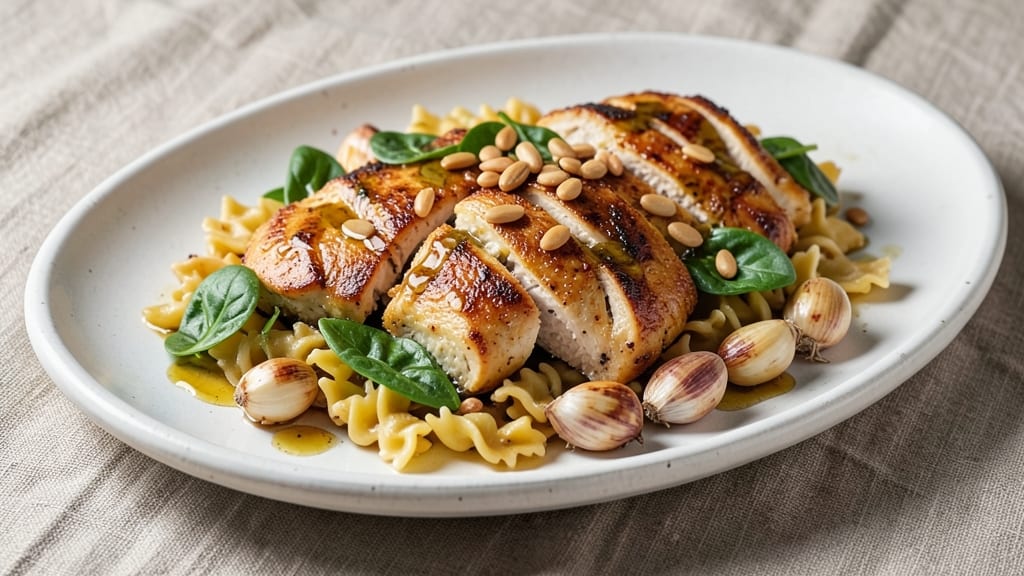
This Cheesecake Factory farfalle with chicken and roasted garlic copycat recipe delivers restaurant-quality flavor at home with simple techniques. After years of perfecting restaurant-style dishes, I've cracked the code for achieving that signature roasted garlic aroma and tender chicken without the fuss.
The secret lies in high-heat searing for crispy edges and low-and-slow roasting for deeply flavorful garlic.
What makes this dish special is how the flavors come together: pan-seared chicken with golden-brown edges, al dente farfalle pasta, and a velvety roasted garlic sauce that ties everything together. The roasting process caramelizes the garlic naturally, creating that rich, sweet depth you'd expect from a professional kitchen.
This method ensures every bite delivers that perfect balance of savory, garlicky goodness.
By the time you plate this dish, you'll have perfectly cooked chicken with crispy edges and tender centers, pasta coated in that luxurious garlic sauce, and a presentation that rivals any restaurant.
The key is overlapping cooking times—roast the garlic while you prep the chicken, and start the pasta just before the chicken finishes. This keeps everything hot and ready to serve without waiting.
The result is a dish that's impressive enough for company but simple enough for weeknights. Serve with a sprinkle of fresh parsley and extra roasted garlic for that final restaurant touch. Here's how to recreate it at home with professional results.
Ingredients for cheesecake factory farfalle with chicken and roasted garlic copycat
Pantry staples meet restaurant magic—just 14 ingredients for a dish that tastes like Cheesecake Factory's signature farfalle.
| Ingredient | Amount | Notes |
|---|---|---|
| Boneless, Skinless Chicken Breasts 🍗 | 1 ½ lb | Pounded to even 1/4-inch thickness |
| Faralle Pasta 🍝 | 12 oz | Bowtie pasta, al dente preferred |
| Garlic Cloves 🧄 | 12 whole | Peeled, unpeeled for roasting |
| Extra-Virgin Olive Oil 🫒 | ½ cup | High-quality, fruity variety |
| Unsalted Butter 🧈 | 3 tbsp | Full-fat for richness |
| Heavy Cream 🥛 | ½ cup | Full-fat for velvety sauce |
| Chicken Broth 💧 | 1 cup | Low-sodium preferred |
| Fresh Parsley 🌿 | ¼ cup | Chopped, for garnish |
| Diamond Crystal Kosher Salt 🧂 | 1 ½ tsp | For seasoning and finishing |
| Ground Black Pepper 🌶️ | ½ tsp | Freshly ground preferred |
| Granulated Garlic 🧄 | 1 tsp | For finishing sauce |
| Lemon Juice 🍋 | 1 tbsp | Freshly squeezed |
| All-Purpose Flour 🌾 | 1 tbsp | For thickening sauce |
| Parmesan Cheese 🧀 | ½ cup | Freshly grated, for garnish |
The garlic is non-negotiable here. Whole cloves roast until caramelized for that signature sweetness—don't skip the unpeeled step. I grab mine from Whole Foods' bulk section where they're always fresh. For the chicken, look for evenly sized breasts at Costco or your local butcher—they'll sear more consistently. Pound them to even thickness (about 1/4-inch) before cooking. The farfalle? De Cecco or Barilla are my go-tos—they hold sauce beautifully without turning mushy.
No whole garlic cloves? Granulated garlic at double the amount works in a pinch, but you'll lose that caramelized depth. Short on heavy cream? Half-and-half plus a splash of milk keeps the sauce rich. The flour is just for thickening—don't skip it, but don't overdo it either. For the parsley, fresh is best, but dried at one-third the amount gets you close if you're in a bind. The lemon juice brightens everything, so don't use bottled—fresh is worth the squeeze. And that Parmesan? Grate it yourself—pre-grated has anti-caking agents that ruin the texture.
Roasted garlic keeps in the fridge for 1 week if stored in olive oil—just submerge the cloves in a jar. The cooked pasta reheats beautifully, but add a splash of water or broth to prevent drying. For the chicken, cook it just before serving—it's best crispy. Portion the sauce into containers with a layer of pasta underneath to keep everything from sticking. This dish tastes even better the next day, so make extra—it's perfect for meal prep.
Why You'll Love This Recipe
- I’ll be real: restaurant copies can feel indulgent, but this one’s surprisingly affordable. A whole chicken breast, a bag of faralle, and a head of garlic? That’s a fraction of the cost of taking out. And the leftovers? Even better the next day—just reheat with a splash of pasta water to revive the sauce. It’s the kind of dish that makes me feel like I’m treating myself without breaking the bank.
- One-Pan Magic: I love that this dish turns a single skillet into your shortcut—no extra pots or pans clogging up your kitchen. The roasted garlic cloves and pounded chicken breasts cook simultaneously while the pasta boils nearby, so you’re basically running a one-woman kitchen operation. Honestly, it’s the kind of meal that makes me feel like a pro without the cleanup headache.
- Cheesy, Creamy, Addictive: That sauce? It’s the star. The roasted garlic cloves, mashed right into the pan with butter and flour, create a velvety sauce that’s rich but not heavy—thanks to the heavy cream and lemon juice balancing it out. And the crispy chicken? The golden edges paired with the creamy pasta? Chef’s kiss. My kids fight over seconds, and I don’t even feel guilty about it.
- Weeknight Hero: This isn’t your fancy date-night dish—it’s the kind of meal that saves me on a Tuesday when I’m exhausted but still want something special. Faralle pasta holds up beautifully to the sauce, and the chicken cooks in under 10 minutes once it hits the pan. Plus, the roasted garlic can prep ahead and store for a week, so you’re always one step ahead.
Step-by-step instructions for garlic-infused pasta with crispy chicken
Here's how to recreate that signature Cheesecake Factory dish at home—crispy chicken, rich garlic sauce, and perfectly al dente faralle.
Roast the Garlic and Pound the Chicken
Preheat your oven to 400°F. Peel 6 of the 12 garlic cloves, leaving the skins on the remaining 6 cloves for roasting. Toss the unpeeled cloves with 1 tablespoon of the extra-virgin olive oil and place them on a parchment-lined baking sheet. Roast for 20-25 minutes until the skins are golden and the cloves are soft enough to squeeze out easily. This creates the signature roasted garlic flavor that defines the dish.
While the garlic roasts, pound the 1½ lb boneless, skinless chicken breasts to an even ¼-inch thickness between two sheets of plastic wrap. This ensures even cooking and that signature crispy exterior. Season both sides generously with 1½ teaspoons of the diamond crystal kosher salt and ½ teaspoon of the ground black pepper. Let the chicken sit at room temperature for 15 minutes while the garlic finishes roasting.
Sear the Chicken and Prepare the Pasta
Heat 2 tablespoons of the extra-virgin olive oil and 1 tablespoon of the unsalted butter in a large skillet over medium-high heat until the butter foams. Add the pounded chicken and cook for 3-4 minutes per side until the edges are deep golden brown and the chicken reaches 165°F internally. Transfer the chicken to a plate and tent loosely with foil to keep warm.
In a separate pot, bring enough salted water to a rolling boil. Add the 12 oz faralle pasta and cook according to package instructions until 1 minute shy of al dente. Reserve ½ cup of the pasta water before draining—this starchy liquid is essential for creating the silky sauce. The pasta should have a slight bite to it, as it will finish cooking in the sauce.
Build the Roasted Garlic Sauce
In the same skillet used for the chicken, reduce the heat to medium and add the remaining 1 tablespoon unsalted butter and 1 tablespoon extra-virgin olive oil. Add the 6 peeled roasted garlic cloves and mash them directly into the pan with the back of a wooden spoon. Cook for 1 minute until fragrant, then sprinkle in the 1 tablespoon all-purpose flour and stir vigorously for 30 seconds to create a light roux.
Gradually whisk in the ½ cup heavy cream and 1 cup chicken broth, scraping up any browned bits from the bottom of the pan. Add the 1 tablespoon lemon juice, 1 teaspoon granulated garlic, ½ teaspoon diamond crystal kosher salt, and ½ teaspoon ground black pepper. Simmer for 5-7 minutes until the sauce thickens enough to coat the back of a spoon. If it thickens too much, whisk in 1-2 tablespoons of the reserved pasta water to reach your desired consistency.
Combine and Finish
Add the drained faralle pasta to the skillet and toss to coat evenly in the sauce. Return the chicken to the pan, cutting it into ½-inch strips if it's still in large pieces. Toss everything together for 1-2 minutes until the chicken is heated through and the pasta is fully coated. The sauce should cling beautifully to each strand of pasta, creating that signature Cheesecake Factory texture.
Transfer the dish to serving plates and garnish each portion with ½ cup of the freshly grated parmesan cheese and ¼ cup of the chopped fresh parsley. The parmesan adds a final salty, umami punch, while the parsley brightens the dish with a fresh finish. Serve immediately while the chicken is still crispy and the pasta holds its shape.
Pro Tips For Making Cheesecake Factory Farfalle With Chicken And Roasted Garlic Copycat
- CRUSH GARLIC SKINS FIRST: I learned this the hard way—roasting whole garlic cloves without crushing the skins first means you’ll spend 5 minutes squeezing them later instead of just scooping out the soft pulp. Give each unpeeled clove a firm smash with the flat side of your knife before roasting. The skins will crack open easier, and you’ll save time (and frustration) when they’re golden and ready.
- SEAR CHICKEN IN BATCHES: Crowding the pan turns your crispy chicken into sad, steamed cutlets. Cook the pounded breasts in batches if your skillet can’t fit them without overlapping—even if it means two rounds of searing. The edges need that golden crust, and a hot pan works best with one piece at a time. Trust me, your future self will thank you when the chicken holds its shape.
- RESERVE PASTA WATER EARLY: This isn’t the prettiest method, but it’s the tastiest. Drain the faralle just until it’s clinging to the colander, then immediately pour the reserved ½ cup of starchy water into a measuring cup. If you wait, the water cools and loses its ability to emulsify the sauce—you’ll end up with a gloppy mess instead of that silky, clingy texture. Do it while the pasta’s still hot.
- FINISH WITH GRANULATED GARLIC: Sounds weird, but it works: Add that 1 teaspoon of granulated garlic after the sauce thickens, not during. The roasted garlic cloves give you the deep, sweet base, while the granulated garlic adds a bright, sharp kick that mimics the restaurant version. Skip this, and your sauce will taste flat—like you missed half the flavor.
Best sauces and condiments for these flavors
Garlic Butter Boost
This dish shines when you add a generous drizzle of garlic butter right before serving. Melt 2 tablespoons unsalted butter with 1 minced garlic clove in a small pan, then spoon it over each plate.
The rich, buttery aroma elevates the roasted garlic flavor and adds a luxurious touch that feels like a restaurant upgrade. I always keep a jar of Penzeys garlic-infused butter in my freezer for quick access—it’s a game-changer. 💛
Red Wine Reduction
For an unexpected twist, reduce ½ cup dry red wine with 1 tbsp olive oil and 1 minced shallot until syrupy, then mix it into the finished sauce. The wine’s acidity cuts through the richness of the garlic and chicken, adding complexity.
I use Cabernet Sauvignon because its bold tannins pair beautifully with the dish. This works especially well if you have leftover sauce—just simmer it down after tossing with pasta. 🍷
Spicy Arrabbiata Kick
If you love heat, stir 1 tsp crushed red pepper flakes into the roasted garlic sauce during the simmering step. For extra kick, add 1 tsp hot honey at the end—it balances the spice with sweetness.
I keep a small jar of Penzeys hot honey on hand because it’s just sweet enough to tame the heat without overpowering. This adds a modern, spicy contrast to the classic dish. 🌶️
Lemon Zest Zing
A final sprinkle of 1 teaspoon lemon zest over each plate brightens the dish with citrusy freshness. The bright acidity cuts through the richness of the garlic and chicken, making every bite more vibrant.
I always zest my own lemons—it’s so much more flavorful than just using juice. This little touch feels like a secret ingredient, but it’s actually a classic trick in Italian cooking. 🍋
Pesto Swirl
For a herby twist, stir ¼ cup basil pesto into the sauce during the final toss with pasta. I love using homemade basil pesto with pine nuts and Parmesan, but store-bought works in a pinch.
The pesto adds a fresh, peppery note that balances the richness of the garlic and chicken. This variation is perfect if you have leftover pesto from another dish. 🌿
Nutrition facts
Frequently asked questions
Why pound the chicken breasts to ¼-inch thickness?
Pounding ensures even cooking and creates that signature crispy exterior the restaurant dish is known for. The thinner cut cooks faster and develops that golden-brown sear on all sides without drying out. This technique also guarantees tender, juicy chicken every time—no more dry or undercooked spots!
What if my pasta water doesn't have enough starch?
If your pasta water isn't starchy enough, simply cook the pasta 1 minute longer before draining. The extra cooking time releases more starch naturally. For extra richness, reserve ½ cup of the pasta water and stir it into the sauce at the end—this helps create that silky, clinging texture.
Can I make this dish ahead of time?
You can prep components ahead, but cook the chicken and assemble the dish just before serving. Store the roasted garlic cloves in olive oil in the fridge for 1 week—just squeeze them out when ready to use. Cook the pasta fresh and toss with sauce right away to maintain that perfect al dente bite. The chicken reheats best with a splash of water or broth.
What's the best way to cut the chicken for serving?
Cut the chicken into ½-inch strips for easy eating and even distribution of sauce. This size works perfectly with the farfalle pasta and ensures every bite has a balance of chicken and garlic-infused sauce. If serving with a fork, you can leave it in larger pieces, but strips are ideal for casual dining.