
Main Courses
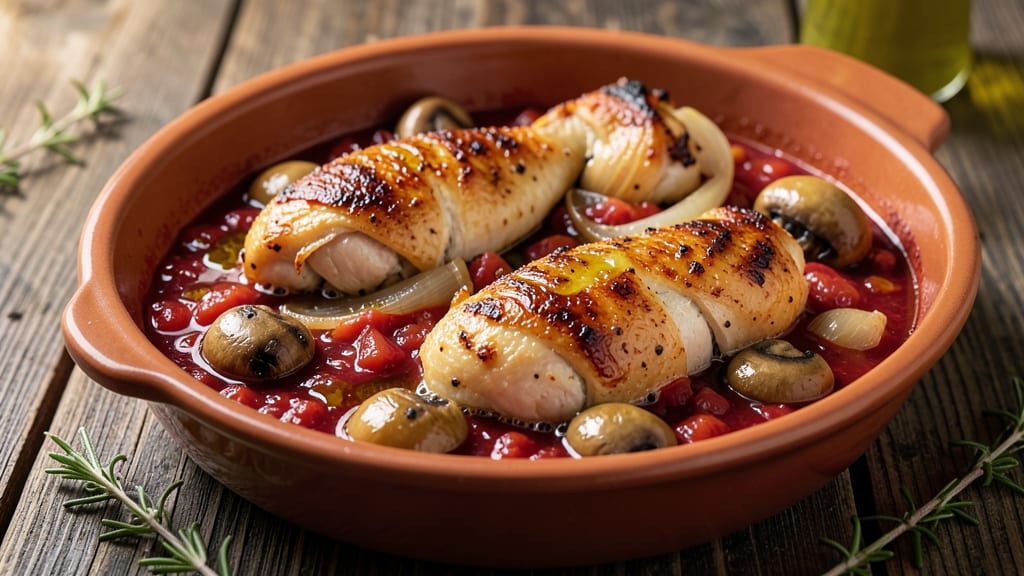
Betty Crocker's chicken cacciatore delivers the rich, tomato-basil simmer that makes this Italian classic feel like a restaurant masterpiece.
I've adapted it to focus on one-pan simplicity while keeping the deep, layered flavors that define the dish—tender chicken, caramelized mushrooms, and a sauce so velvety it practically melts into every bite. The secret lies in browning the chicken properly and letting the wine reduce slowly, creating that signature depth.
What makes this version work is balancing tradition with shortcuts—like using a quick roux to thicken the sauce while still achieving that restaurant-quality finish. You'll start with chicken thighs and breasts, seared until golden, then layer in onions, mushrooms, and tomatoes before adding white wine and herbs.
The long, slow simmer transforms tough cuts into melt-in-your-mouth perfection, all while developing flavors that only time can create.
By the time it's done, you'll have a dish that's perfectly balanced—tender chicken swimming in a glossy, aromatic sauce with just the right amount of acidity from the tomatoes and brightness from fresh basil.
The aroma alone will have everyone gathering at the table, and the taste? That's where the magic happens. This is comfort food at its finest, elevated without being intimidating.
Serve it over pasta, with crusty bread for soaking up the sauce, or even alongside polenta for a heartier meal. The leftovers reheat beautifully, making it ideal for meal prep or feeding a crowd. Let's get cooking—this is one dish that gets better with every bite.
Ingredients for betty crocker chicken cacciatore
Pantry staples meet Italian tradition—just a few ingredients for restaurant-worthy chicken cacciatore.
| Ingredient | Amount | Notes |
|---|---|---|
| Chicken Thighs and Breasts 🍗 | 1 ½ lb | Bone-in, skin-on preferred |
| White Onions 🧅 | 1 whole | Thinly sliced, about 2 cups |
| Cremini Mushrooms 🍄 | 8 oz | Sliced, stems removed |
| Garlic Cloves 🧄 | 4 cloves | Minced, fresh preferred |
| Canned San Marzano Tomatoes 🍅 | 1 can | 28 oz, crushed by hand |
| Dry White Wine 🍷 | ½ cup | Sauvignon Blanc or Pinot Grigio |
| Chicken Broth 💧 | ½ cup | Low-sodium preferred |
| All-Purpose Flour 🌾 | 1 tbsp | For roux, unsifted |
| Unsalted Butter 🧈 | 2 tbsp | Full-fat for richness |
| Fresh Basil Leaves 🌿 | ¼ cup | Chopped, stems removed |
| Dried Oregano 🍃 | 1 tsp | Italian preferred |
| Red Pepper Flakes 🌶️ | ½ tsp | Adjust for heat |
| Kosher Salt 🧂 | 1 ½ tsp | Adjust to taste |
| Freshly Ground Black Pepper 🌶️ | ½ tsp | Freshly cracked |
| Olive Oil 🫒 | 2 tbsp | Extra-virgin preferred |
The chicken is the star, so bone-in, skin-on thighs and breasts give you the best texture—crispy skin and juicy meat. Costco or local butchers often have pre-cut packages, but if you're buying whole, ask for a mix of thighs and breasts. The mushrooms? Cremini or baby bella caramelize beautifully—avoid the pre-sliced kind (they brown too fast). For the tomatoes, San Marzano cans are worth the splurge—they're sweeter and less acidic, which keeps the sauce from tasting canned. If you can't find them, any high-quality crushed tomatoes will work, but avoid the watery kind.
No white wine? Substitute extra chicken broth with a splash of lemon juice—it adds brightness without overpowering. Fresh basil is ideal, but dried basil at one-third the amount works in a pinch (though it lacks that fresh punch). The flour and butter roux is key for thickening—don't skip it, even if you're impatient. For the wine, Sauvignon Blanc or Pinot Grigio are classic, but any dry white will do. The red pepper flakes? Adjust to taste—I like mine with a little kick, but it's easy to dial back.
This sauce gets better the next day—make a double batch if you can. Store leftovers in the fridge for 4-5 days, or freeze for 3 months. The chicken reheats beautifully, just warm it gently in the sauce. For serving, I love it over fresh pasta or with crusty bread to soak up every last drop. The aroma alone will have your whole house gathering at the table—trust me on that.
Why You'll Love This Recipe
- The secret’s in the sear: 5-6 minutes per side until golden, then resting the chicken while you build the sauce. That crispy edge with the tender, juicy center? Chef’s kiss. The cremini mushrooms and San Marzano tomatoes turn it into something rich and velvety—like a hug in a bowl.
- One-Pan Magic: I love that this dish lives in one Dutch oven—no extra pans, no cleanup chaos. That crispy chicken seared in olive oil? It stays in the pot for the whole sauce-making process, so every bite gets that deep, caramelized flavor without the hassle.
- Crispy Outside, Creamy Inside: The secret’s in the sear: 5-6 minutes per side until golden, then resting the chicken while you build the sauce. That crispy edge with the tender, juicy center? Chef’s kiss. The cremini mushrooms and San Marzano tomatoes turn it into something rich and velvety—like a hug in a bowl.
- Leftover Powerhouse: This makes enough for leftovers and dinner, honestly. The flavors get even better the next day—just reheat gently with a splash of broth to loosen the sauce. My kids beg for seconds, and I’ve taken it to potlucks where it’s always the first dish gone.
Step-by-step instructions for betty Crocker chicken cacciatore recipe
Here's how to create a rich, one-pan Italian classic that delivers perfect flavor every time.
Sear the Chicken for Maximum Flavor
Heat the 2 tablespoons olive oil in a large Dutch oven over medium-high heat. Pat the 1½ lb chicken thighs and breasts dry with paper towels—this ensures a crispy exterior. Season both sides generously with 1½ teaspoons kosher salt and ½ teaspoon freshly ground black pepper. Place the chicken in the pan and cook for 5-6 minutes per side until golden brown and cooked through to 165°F internally.
Here's the thing—don't crowd the pan. Cook the chicken in batches if needed to prevent steaming instead of searing. Once browned, remove the chicken and set it aside on a plate. The rich, caramelized crust you've created is the foundation of this dish, so don't skip this step.
Build the Rich Tomato-Basil Sauce
In the same Dutch oven, reduce the heat to medium and add the 2 tablespoons unsalted butter. Let it melt completely, then add the 1 white onions and cook for 4-5 minutes until softened. Add the 8 oz cremini mushrooms and cook for another 5 minutes until they release their moisture and begin to brown.
Stir in the 4 cloves minced garlic and cook for 30 seconds until fragrant. This is where the flavors start to meld beautifully. Pour in the ½ cup dry white wine and scrape up any browned bits from the bottom of the pan—this captures all that delicious flavor. Let the wine simmer for 2-3 minutes until reduced by half.
Simmer with Tomatoes and Herbs
Add the 1 can crushed San Marzano tomatoes, ½ cup chicken broth, 1 teaspoon dried oregano, and ½ teaspoon red pepper flakes to the pan. Stir well to combine. Return the chicken to the pot, skin-side up, and bring everything to a gentle simmer. Partially cover the pot and let it cook for 20-25 minutes on low heat until the sauce has thickened slightly and the chicken is tender.
I like to check the chicken at the 15-minute mark—it should be falling off the bone easily. If the sauce looks too thick, add a splash of water or broth to loosen it. The goal is a rich, velvety sauce that coats the chicken beautifully. This simmering time is crucial for developing that deep, complex flavor.
Finish with Fresh Basil and Rest
Remove the chicken from the pot and transfer it to a serving platter. Stir the ¼ cup chopped fresh basil leaves into the sauce and let it steep for 2-3 minutes to infuse the flavor. Taste and adjust the seasoning if needed—this is your chance to balance the acidity and saltiness to your preference.
Return the chicken to the sauce, spooning some of the basil-infused sauce over the top. Let the dish rest for 5 minutes before serving. This resting time allows the chicken to reabsorb any juices that might have leaked out during cooking, ensuring each bite is moist and flavorful. Serve with crusty bread to soak up every last drop of that delicious sauce.
Pro Tips For Making Betty Crocker Chicken Cacciatore
- Cook Chicken in Batches: I learned this the hard way—cramming all 1.5 lbs of chicken in the pan at once turns searing into steaming, and you end up with sad, pale meat instead of golden, crispy crust. Work in 2 batches if needed; the extra 2-3 minutes waiting for the second batch to brown is worth the flavor payoff.
- Caramelize Onions Low and Slow: Those 2 cups of sliced white onions need time to soften and develop natural sweetness, not burn. Keep the heat at medium and resist the urge to rush—after 4-5 minutes, they should be translucent with just a hint of color. Trust me, skipping this step means a bland sauce.
- Deglaze Aggressively: When you pour in that ½ cup dry white wine, grab a wooden spoon and scrape the bottom of the pan like you’re digging for buried treasure. Those browned bits (fond) are packed with flavor, and letting them dissolve into the wine is how you build depth. Don’t be shy—get every last bit.
- Test Chicken Early: At the 15-minute simmer mark, pull a piece of chicken away from the sauce and check for tenderness. If it’s still tough, it’ll need another 10 minutes—no amount of sauce can fix overcooked chicken. Better to wait than risk dry, stringy bites, especially with bone-in thighs.
Essential equipment for great betty crocker chicken cacciatore
Your Dutch Oven
For this recipe, a large, heavy-bottomed Dutch oven is non-negotiable—it distributes heat evenly and handles the long simmer without scorching. I swear by my Le Creuset signature series (the classic red or black), but if you're on a budget, a Lodge 7.5-quart cast iron works just as well.
The cast iron retains heat beautifully, which is key for developing those deep, complex flavors. Just make sure to season it properly before first use—nothing ruins a dish like a poorly seasoned pan.
Thermometer Matters
Temperature control is everything in this dish, and a meat thermometer is your best friend. I use a Thermoworks Smoke probe thermometer for precision, but even a basic instant-read thermometer will do.
Check the chicken's internal temperature at 165°F—this ensures it's cooked through without drying out. Trust me, guessing won't cut it here.
Wooden Spoon & Ladle
A sturdy wooden spoon is essential for stirring your sauce without scratching your Dutch oven. I keep a 3-inch wooden spoon from OXO in my kitchen—it's durable and won't warp over time.
Pair it with a heatproof ladle for serving, like the Ball Mason jar ladle, which doubles as a stylish serving tool.
Mortar & Pestle
While not strictly necessary, a mortar and pestle elevates this dish by letting you crush garlic and red pepper flakes right before cooking. It releases more aroma and flavor than just mincing with a knife.
I use a ceramic mortar and pestle from Zojirushi—it's lightweight but tough enough for heavy use. If you don’t have one, a fine grater works in a pinch.
Cheese Grater & Knife Set
For this recipe, you’ll need a fine cheese grater to crush the San Marzano tomatoes by hand (trust me, it makes a difference). I also recommend a sharp chef’s knife (like the Wüsthof Classic) for slicing mushrooms and onions cleanly.
A mandoline can speed up prep, but it’s not essential. Just make sure your knife is razor-sharp—dull blades crush instead of slice, which ruins texture.
Serving Tools
Finish with a serving spoon and a crusty bread basket to soak up every last drop of sauce. I love using a cast iron skillet as a makeshift bread warmer—just pop it in the oven at 200°F while you cook.
Pro tip: Keep a small bowl of fresh basil on the table for garnishing—it adds a pop of color and freshness that elevates the dish.
Nutrition facts
Frequently asked questions
Why does the recipe call for bone-in, skin-on chicken?
The bone-in, skin-on chicken thighs and breasts create richer flavor and tender texture—the bones add depth, while the skin crisps beautifully during searing. This method also keeps the meat juicier during the long simmer. If you prefer boneless, use thighs only for extra moisture, but expect slightly less flavor complexity.
Can I make this dish without white wine?
Substitute ½ cup extra chicken broth with 1 tablespoon lemon juice to maintain brightness. The acidity mimics wine’s effect, though the flavor will be slightly different. For depth, add ½ teaspoon balsamic vinegar—it enhances the tomato base beautifully.
How do I prevent the sauce from getting too thick?
Watch the sauce closely during the 20-25 minute simmer. If it thickens too soon, stir in 1-2 tablespoons warm water or broth to loosen it. Covering the pot loosely with foil allows excess moisture to evaporate gradually. The sauce should coat the back of a spoon but still be pourable.
Is it okay to use dried basil instead of fresh?
Yes, but use one-third the amount—about 2 tablespoons dried basil instead of ¼ cup fresh. Dried basil lacks the vibrant, fresh aroma, so it’s best for backup. For the best flavor, always opt for fresh basil when available, especially for the final infusion step.
Why does the recipe recommend resting the chicken before serving?
Resting for 5 minutes lets the chicken’s juices redistribute after cooking, ensuring every bite is moist and flavorful. Skipping this step can make the meat dry out. Plus, it gives you time to adjust seasoning and garnish with fresh basil before serving.