
Soups & Stews
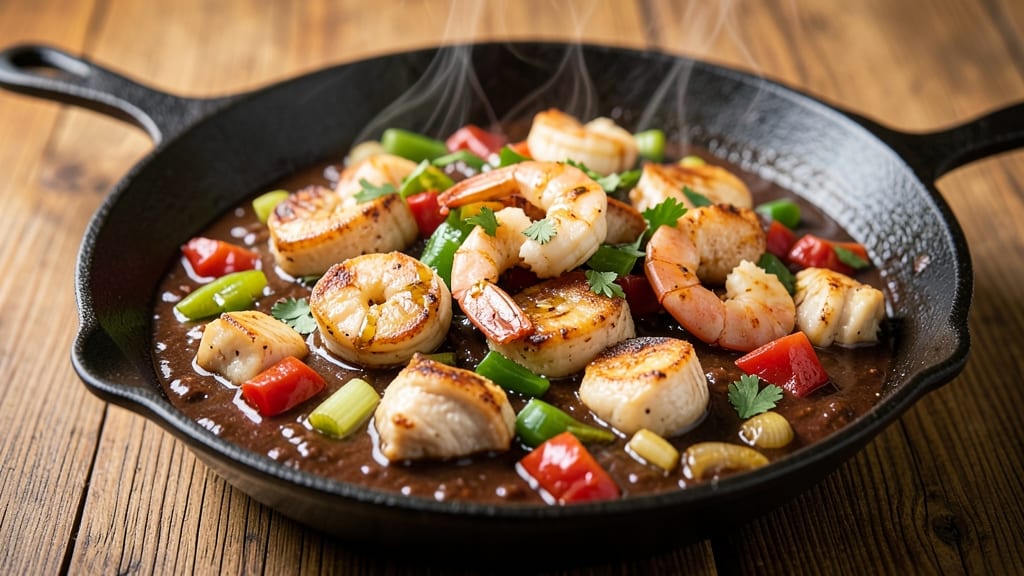
This andouille sausage, chicken, and shrimp gumbo recipe delivers the soul-soothing flavors of Louisiana in every spoonful—deep, smoky, and brimming with tradition. The secret lies in that perfect dark roux, where flour and oil transform into a rich, nutty base that forms the heart of any great gumbo.
I've perfected this technique over years of testing, ensuring your pot will smell like a New Orleans kitchen and taste like home.
What sets this gumbo apart is the balance of textures and flavors: tender chicken, spicy andouille sausage, sweet shrimp, and the holy trinity of onions, bell peppers, and celery.
The dish builds layer by layer—starting with that essential roux, then developing a rich, flavorful broth that simmers for hours to meld every ingredient into harmony. Traditional seasonings like thyme, bay leaves, and filé powder complete the profile, creating a gumbo that's both authentic and approachable.
By the time you serve this gumbo, you'll have a steaming pot of restaurant-quality comfort food that's impossible to resist. The aroma alone will gather your family around the table, while the first bite delivers that perfect combination of smoky depth, spicy heat, and briny sweetness.
It's the kind of dish that tastes even better the next day, making it ideal for meal prep or feeding a crowd.
Serve it with crusty bread to soak up every last drop of that rich gumbo broth, or pair it with a crisp green salad to balance the meal.
This recipe bridges Creole and Cajun traditions, offering the best of both worlds in one unforgettable pot. Let's get cooking—your taste buds are about to thank you.
Ingredients for andouille sausage chicken and shrimp gumbo
Sixteen ingredients, one pot, and a flavor explosion that'll have everyone asking for seconds.
| Ingredient | Amount | Notes |
|---|---|---|
| Andouille Sausage 🌭 | 1 ½ lb | Spicy variety, sliced into rounds |
| Boneless Chicken Thighs 🍗 | 1 ½ lb | Skin-on for best flavor |
| Large Shrimp 🦐 | 1 ½ lb | Peeled, deveined, tail-on |
| Yellow Onion 🧅 | 2 whole | Diced, medium size |
| Green Bell Pepper 🌶️ | 1 whole | Diced, medium size |
| Celery Stalks 🥬 | 3 whole | Diced, stringy kind |
| All-Purpose Flour 🌾 | ½ cup | White, for dark roux |
| Vegetable Oil 🫒 | ½ cup | Smoke point 400°F+ |
| Chicken Broth 💧 | 4 cups | Low-sodium, homemade preferred |
| Dried Thyme 🌿 | 1 tbsp | Or 1 tbsp fresh thyme |
| Bay Leaves 🌿 | 2 whole | Dried, standard size |
| Filé Powder 🌶️ | 2 tbsp | Ground sassafras, essential |
| Cayenne Pepper 🔥 | 1 tsp | Adjust for heat preference |
| Garlic Cloves 🧄 | 4 cloves | Minced, fresh preferred |
| Salt 🧂 | 2 tsp | Kosher or sea salt |
| Black Pepper 🌶️ | ½ tsp | Freshly ground preferred |
| Lemon Juice 🍋 | 2 tbsp | Freshly squeezed |
The roux is where this gumbo's magic happens—don't skimp on the oil or flour. Vegetable oil is your best bet for that deep, nutty color without burning, and White Lily flour from the Southern section at Walmart or Kroger works perfectly. If you're nervous about the roux, start with a lighter stage (peanut butter color) and build up—burnt roux means starting over. The andouille sausage? Zatarain's or Johnsonville are the gold standards, but any good-quality smoked sausage will do. Look for the kind with visible fat marbling—it's what gives that smoky flavor. For the shrimp, frozen tail-on from the seafood section is fine, just thaw them in cold water before using.
No filé powder? Ground sassafras is the traditional choice, but you can substitute cornstarch at half the amount if you're in a pinch—though purists will notice the difference. Fresh thyme is ideal, but dried works at one-third the amount. The holy trinity (onion, bell pepper, celery) can be prepped ahead and stored in the fridge for 3 days—just chop it all at once and keep it in a sealed container. For the chicken, thighs are non-negotiable—they stay juicy while the shrimp cooks. If you can't find skin-on, boneless, skinless thighs work but won't be as flavorful. The cayenne? Start with half a teaspoon if you're sensitive to heat—you can always add more later.
This gumbo tastes even better the next day, so make a double batch if you can. Store leftovers in the fridge for 4-5 days, or freeze for up to 3 months—just thaw overnight in the fridge before reheating. The roux and broth can be made ahead too, so you're not stuck stirring for hours on a weeknight. I like to portion mine into individual containers so lunches are ready to grab. And if you've got crusty bread on hand, toast it while the gumbo simmers—the aroma alone will make your kitchen smell like a New Orleans restaurant.
Why You'll Love This Recipe
- Here’s what sold me: shrimp feels fancy, but the chicken and sausage stretch it into a full meal for half the cost. Plus, the leftovers? Just as good reheated the next day—no sad, dry gumbo here. It’s the kind of dish that makes you feel like you’re treating yourself, even when you’re not.
- One-Pot Magic: I swear by this recipe because it’s actually one-pot—no skillet juggling, no extra bowls. Slice the andouille, dump in the chicken and shrimp, and let the roux work its dark, smoky magic while you chop one onion and one pepper. That’s it. No stress, no mess.
- Smoky Deep Comfort: The andouille brings the heat, but it’s the slow simmer that makes it ridiculously good—the sausage melts into the broth, the chicken stays juicy, and those shrimp? They absorb just enough spice to feel like part of the family. Honestly, I’ve made gumbo before, but this one sticks with you.
- Weeknight to Party Fix: Between us, this is my go-to when I need to feed a crowd without slaving away. Double the batch for game day, serve it with crusty bread at a dinner party, or pack leftovers for lunch—it’s that adaptable. (Yes, even on a Tuesday night when you’re exhausted.)
Step-by-step instructions for andouille sausage, chicken, and shrimp gumbo
Let's create a rich, flavor-packed gumbo that balances smoky sausage, tender chicken, and sweet shrimp.
Build the Dark Roux Foundation
Heat the 0.5 cup vegetable oil in a large, heavy-bottomed pot over medium heat. Add the 0.5 cup all-purpose flour and whisk constantly to prevent burning. This is where the magic happens—cook the roux for 45-60 minutes, stirring frequently, until it reaches a deep, chocolate-brown color. You'll see it transform from pale to rich amber, then finally to a dark, velvety brown. This dark roux forms the soul of your gumbo, providing that signature depth of flavor.
Real talk: Don't rush this step. If the roux starts to smoke or burn, reduce the heat immediately and continue whisking. The goal is a smooth, glossy roux without any graininess. Once it reaches that perfect dark brown stage, you're ready for the next step. I like to test it by dipping a spoon in—it should coat the back smoothly without being pasty.
Sauté the Holy Trinity and Seasonings
Add the diced yellow onion, diced green bell pepper, and diced celery stalks to the dark roux. Stir well to coat everything in that rich, flavorful base. Cook for 8-10 minutes over medium heat until the vegetables soften slightly but still retain their shape and color. This is your "holy trinity" of gumbo flavors—sweet, smoky, and slightly crisp.
Next, add the minced garlic cloves, 1 tbsp dried thyme, 1 tsp cayenne pepper, 2 tsp salt, and 0.5 tsp black pepper. Stir for 1-2 minutes until fragrant. The spices should meld with the vegetables, creating a complex aroma that fills your kitchen. This is where the gumbo starts to come together—don't skip this step. The spices need time to bloom and release their full flavor.
Brown the Sausage and Chicken
Push the vegetables to one side of the pot and add the 1.5 lb andouille sausage and 1.5 lb boneless chicken thighs to the empty space. Let them brown for 5-7 minutes without stirring, which helps develop a nice crust. Once the sausage is golden and the chicken begins to brown, stir to combine everything. Pour in the 4 cups chicken broth and add the 2 whole bay leaves. Bring to a gentle boil, then reduce heat to low and let it simmer for 30-40 minutes until the chicken is tender and easily pulls apart.
Here's the thing—don't lift the lid during this simmering time. Every time you peek, you lose heat and moisture. Let the gumbo work its magic undisturbed. The chicken should be fork-tender, and the broth should have thickened slightly, absorbing all those rich flavors from the roux and vegetables.
Add Shrimp and Finish with Filé Powder
Once the chicken is tender, remove it from the pot and set it aside. Add the 1.5 lb large shrimp to the gumbo and cook for 3-5 minutes until they turn pink and opaque. The shrimp should cook quickly—don't overcook them or they'll turn rubbery. Remove the shrimp and set them aside with the chicken. Discard the bay leaves.
Return the chicken and shrimp to the pot and stir in the 2 tbsp filé powder gradually. This is the secret ingredient that thickens the gumbo and adds that distinctive Louisiana flavor. Stir gently—filé powder can clump if added too quickly. The gumbo should thicken almost immediately. If it's too thick, you can thin it with a splash of hot water or broth. Finally, stir in the 2 tbsp lemon juice to brighten the flavors and cut through the richness.
Serve with Confidence
Taste your gumbo and adjust the seasoning if needed. It should be rich, smoky, and full of layers of flavor. Serve it hot in bowls, garnished with extra filé powder if desired. Each spoonful should deliver a perfect balance of smoky sausage, tender chicken, sweet shrimp, and that unmistakable gumbo flavor. This dish tastes even better the next day as the flavors continue to meld, so consider making extra for leftovers.
Pair it with crusty bread to soak up every last drop of that flavorful broth. You've just created a classic gumbo that captures the heart of Louisiana cuisine in one delicious pot.
Pro Tips For Making Andouille Sausage Chicken And Shrimp Gumbo
- CRANK THE HEAT FOR SAUSAGE: Start your andouille in a screaming-hot pot—no simmering, no waiting. The casings need that initial shock to render fat properly and prevent a greasy, gluey mess later. I learned this after my first gumbo turned into a sad, oily stew.
- TRIM THE SHRIMP LAST: Add shrimp only in the final 3-4 minutes, or they’ll turn rubbery faster than you can say "overcooked." Peeled but deveined, tails off—no one wants to fish for bones at the table. (Yes, even if you’re impatient like me.)
- SALT THE CHICKEN THIGHS: Pat them dry first, then hit them with salt at least 30 minutes before cooking. This guarantees juicy meat that doesn’t turn to mush in the roux. I used to skip this and wondered why my gumbo tasted like sad, waterlogged chicken.
- SAVE TIME WITH A COLD ROUX: Make your roux ahead and refrigerate it overnight—it’ll take half the time to darken when you return to it. Just let it sit at room temp for 10 minutes first, or it’ll seize up. (Your future self will thank you.)
Perfect pairings for this recipe
Bread Pairings
Nothing beats a warm slice of crusty French bread or sourdough for soaking up gumbo’s rich broth. I love using Rosetta Bakery’s sourdough loaf from the grocery store—its open crumb structure traps every last drop.
For extra authenticity, try cornbread (especially if you're leaning Cajun-style) or hushpuppies for a Southern twist. 🥖
Drink Recommendations
A bold red wine like Cabernet Sauvignon or Zinfandel stands up to gumbo’s smoky, spicy flavors. For beer lovers, a dark lager such as Negra Modelo or a stout like Guinness complements the richness. If you prefer something lighter, a dry Riesling cuts through the heat beautifully. 🍷
Side Dish Harmony
Balance the richness with a cooling side like collard greens sautéed with garlic or a creamy potato salad (try Heinz classic-style). For a fresh contrast, a cucumber and tomato salad with red onion and lime dressing works wonders.
I often serve corn on the cob—the sweetness pairs perfectly with the gumbo’s smoky depth. 🥗
Spicy Finishing Touches
Set out hot sauce (I recommend Crystal or Tabasco) and extra filé powder for guests to customize their bowls. A sprinkle of fresh parsley or green onions adds brightness, while a lemon wedge brightens each bite.
For a smoky kick, a drizzle of chipotle oil elevates the dish to restaurant-level. 🌶️
Dessert Pairings
End the meal with something sweet but not overly heavy—benne wafers (sesame seed cookies) or beignets from Café du Monde bring that classic New Orleans vibe. For a lighter option, key lime pie or pecan pralines offer a refreshing finish. 🍰
Make-Ahead Tips for Serving
Prep sides ahead of time to streamline serving. Store cornbread in the oven at 200°F to keep it warm, and chill potato salad for 1 hour before serving.
If you’re hosting, set out individual bowls with garnishes ready—this way, you can focus on enjoying the meal instead of last-minute prep. ✨
Nutrition facts
Frequently asked questions
Can I substitute shrimp with another seafood in this gumbo?
If shrimp aren't available, try 1.5 lb of scallops or 1 lb of mussels or clams. For mussels/clams, steam them open first, then add to the gumbo for the last 5 minutes of cooking. Avoid overcooking shellfish—they turn rubbery quickly.
What makes a dark roux different from a regular roux?
The dark roux is the soul of gumbo! It's cooked until it reaches a deep chocolate-brown color (45-60 minutes of constant stirring), developing nutty, almost caramelized flavors. A regular roux stops at peanut butter color (15-20 minutes) and has a milder taste. The dark roux adds that signature smoky depth that separates gumbo from other stews.
How can I make this gumbo less spicy?
Reduce the cayenne pepper to ½ teaspoon or omit it completely. For extra heat control, serve with cooling sides like cucumber salad or offer milk/cream on the side. You can also remove some of the shrimp's natural heat by soaking them in cold water with a splash of lemon juice for 10 minutes before cooking.
Can I make this gumbo in a slow cooker?
Yes! Brown the sausage and chicken in a skillet first, then transfer everything to the slow cooker. Add the dark roux, holy trinity, broth, and seasonings. Cook on low for 6-8 hours or high for 3-4 hours. Add shrimp only in the last 10 minutes to prevent overcooking. The slow cooker method is perfect for hands-off flavor development.
Why does my gumbo taste bitter?
Bitterness usually comes from burnt roux or overcooked shrimp. For the roux, watch closely and reduce heat if it starts smoking. For shrimp, cook them for only 3-5 minutes—they're done when they turn pink. Another tip: simmering too long can concentrate flavors. If it's too bitter, stir in 1 tablespoon lemon juice or a pinch of sugar to balance.